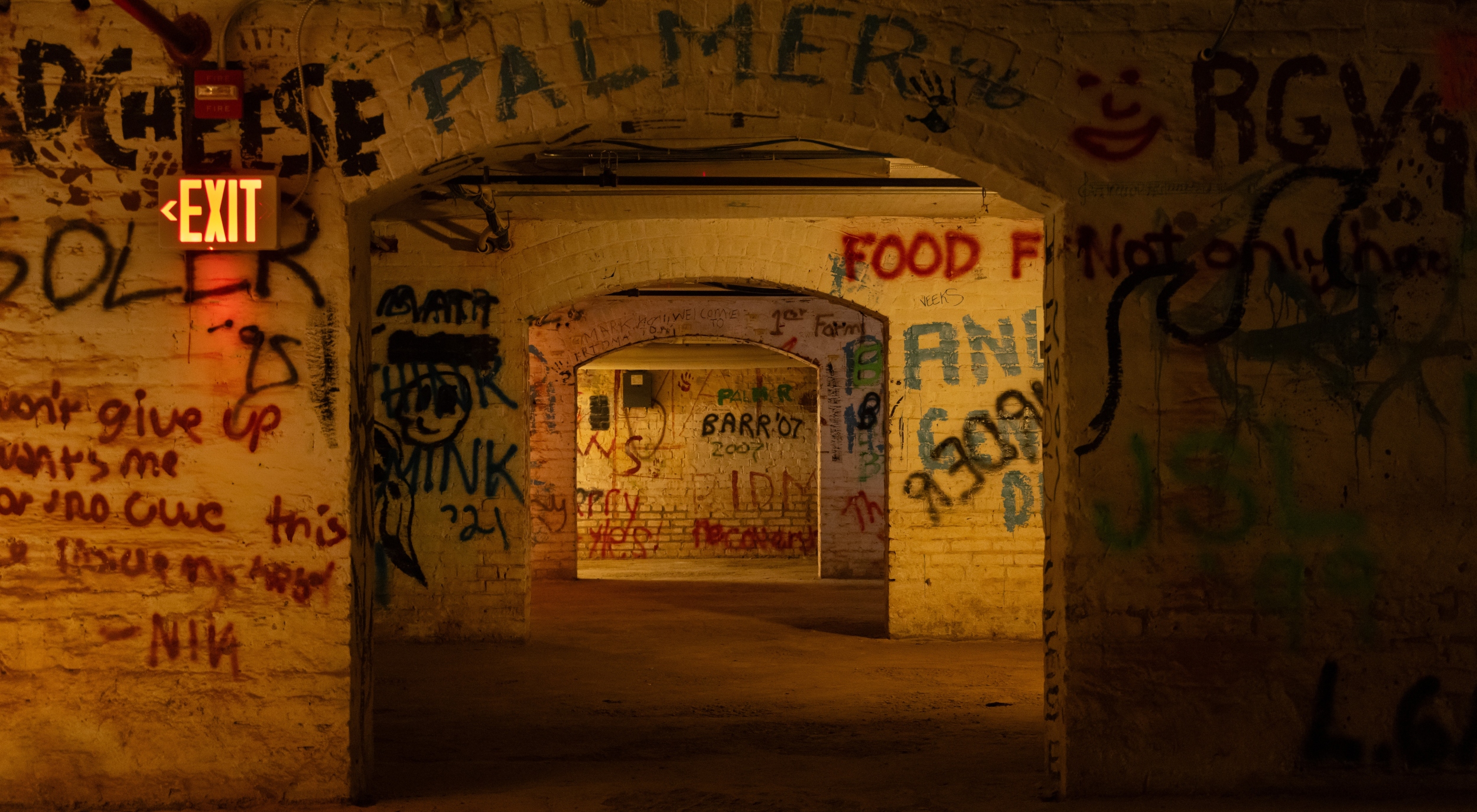
THE BASEMENT OF WOODS MEMORIAL HALL, erected in 1890, was long ago a hive of activity for students, serving as a darkroom to process photographic prints, a range for an old rifle club, and rehearsal space for burgeoning rock bands. But since the School’s facilities have expanded, the Mem basement has been largely off-limits to students for years. Still, as generations of graffiti attest, there have been breaches over the years.
The Hidden Lawrenceville
Everyone knows the School’s iconic architecture and scenic landscapes. But have you ever seen these veiled spaces that exist on no campus tour? We’ll bet (most of) you have not.

Everyone who has ever passed through its gates knows well the beauty of Lawrenceville’s campus. It’s a National Historic Landmark, after all. The iconic Romanesque and Georgian styles and scenic landscapes, interspersed with so many other thoughtfully conceived modern structures, provide an enviable luster to the classrooms and living quarters of some of the world’s finest students. They also animate the vivid background to the fond memories of the generations of alumni who preceded them.
But there are also the dimly lit spaces, the domain of cobwebs and dust, that exist out of the public view. Though they belong to the School’s history, these locations are part of no campus tour. Lost to obsolescence or intended to be unseen, they are concealed within the historical architecture we celebrate. These are spots we imagine few Lawrentians have seen over their years in school.
They are the hidden Lawrenceville.
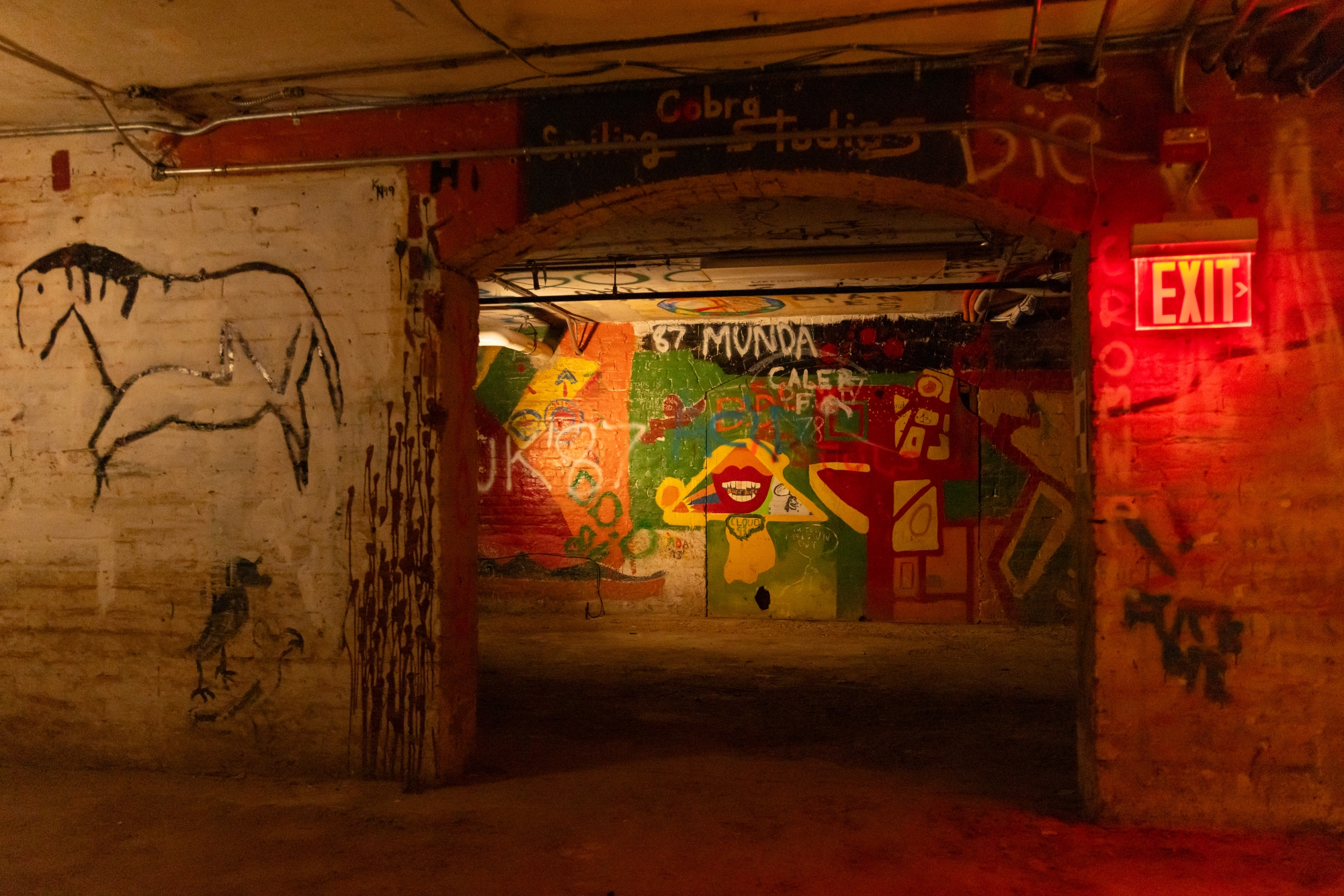
In the WOODS MEMORIAL HALL BASEMENT, the graffiti ranges from crudely sprayed names and line drawings to more elaborate mural art (above and right), with each room like its own gallery. Some students chose to make themselves known, while others left their marks vague.
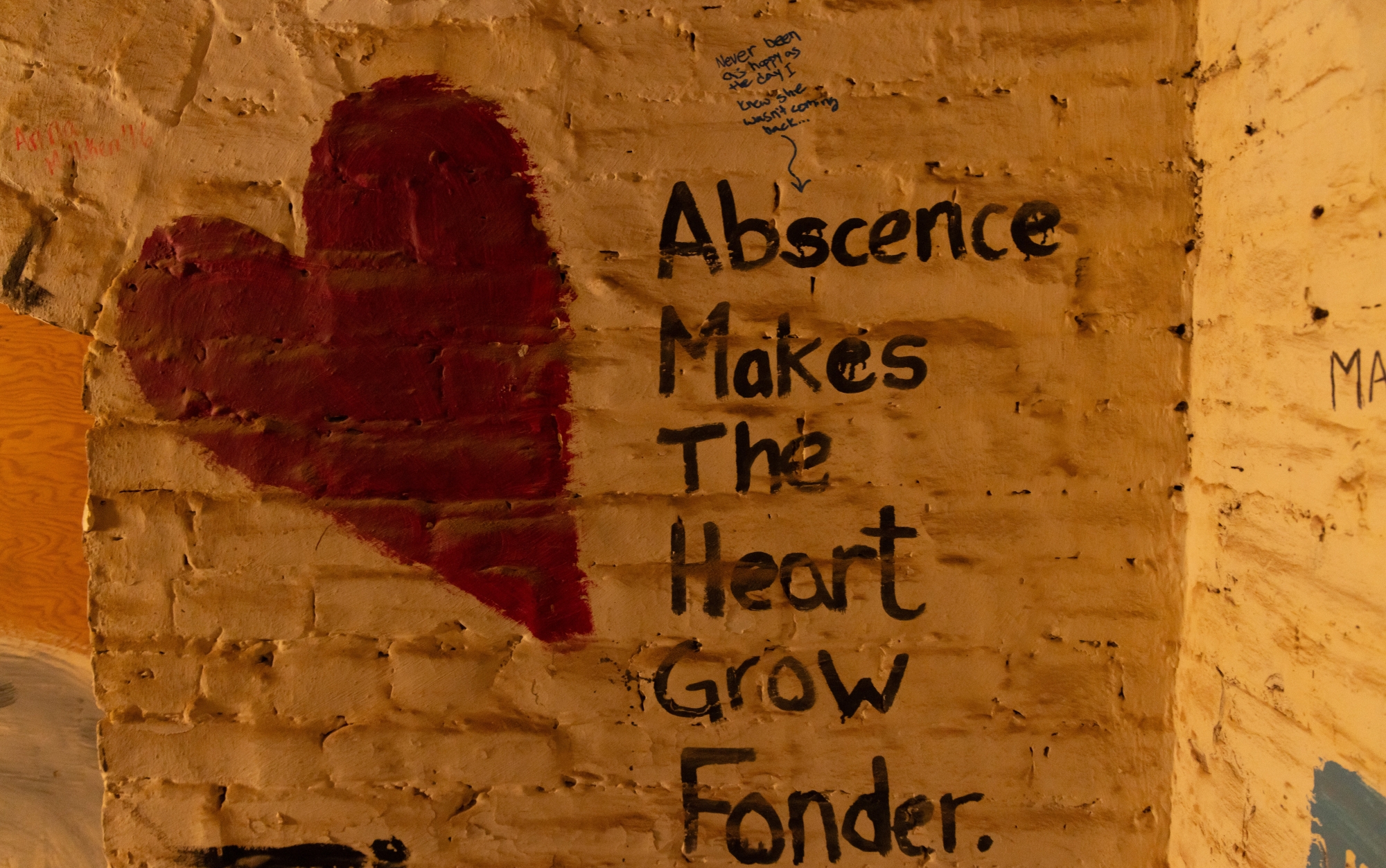
Even when the sentiment is sweet, proper spelling can remain elusive.
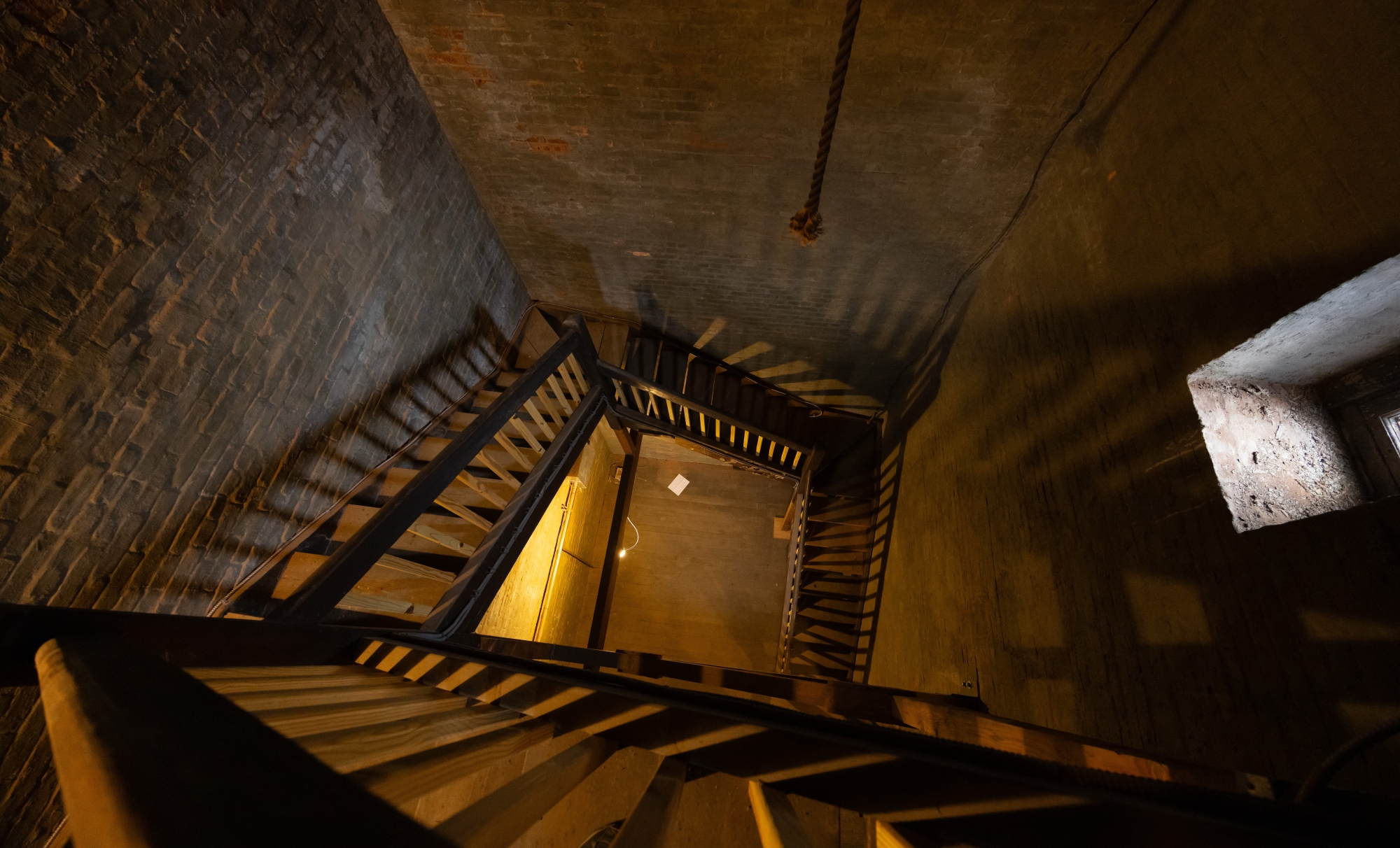
A spiral staircase behind a locked door begins the ascent toward a flat landing in the BELL TOWER OF EDITH MEMORIAL CHAPEL, built in 1895. From there, you begin the perilous climb up four flights of old wooden steps (above), each turning left at one of the tower’s walls on your right — with a long drop down on your left. Note the abbreviated rope bell pulley, which was decommissioned years ago.
At the top of the bell tower (left and below), you reach the belfry, housing the two large bells that have rung for many special occasions over the years.
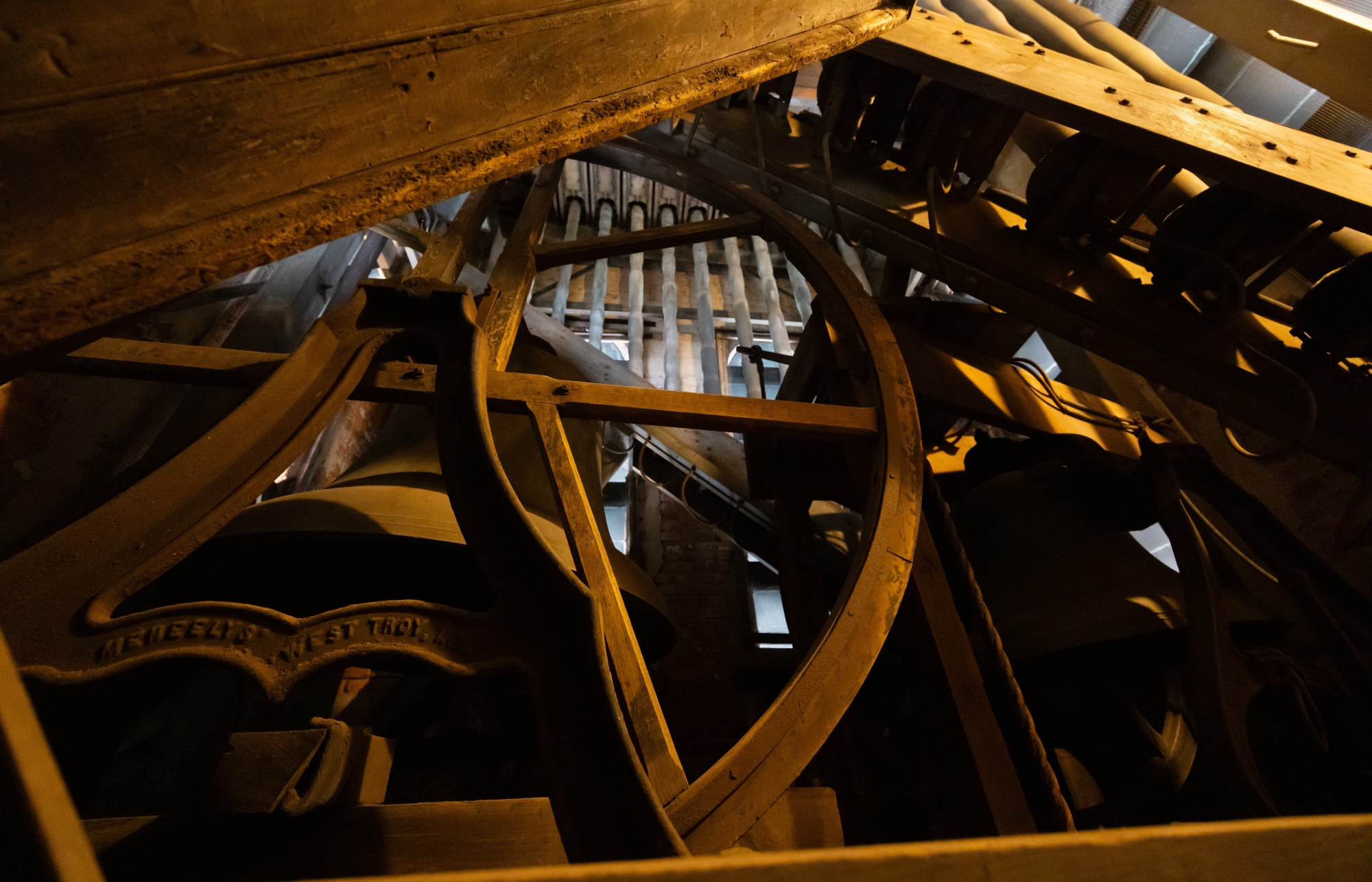
At the landing level of the bell tower, a century-old sticker of the school seal, touting the John C. Green Foundation, is affixed to the side of the bell tower staircase.
The Georgian-style McPherson House originally functioned as the LAWRENCEVILLE SCHOOL INFIRMARY from 1929 until 1976, when a new infirmary was built. But even a half century later, the basement contains plenty of reminders of its origins, including a huge, century-old decommissioned wood-clad refrigerator (below) and a window used to dispense medications (left), nestled within the sterile white tile that runs the length of the hall.
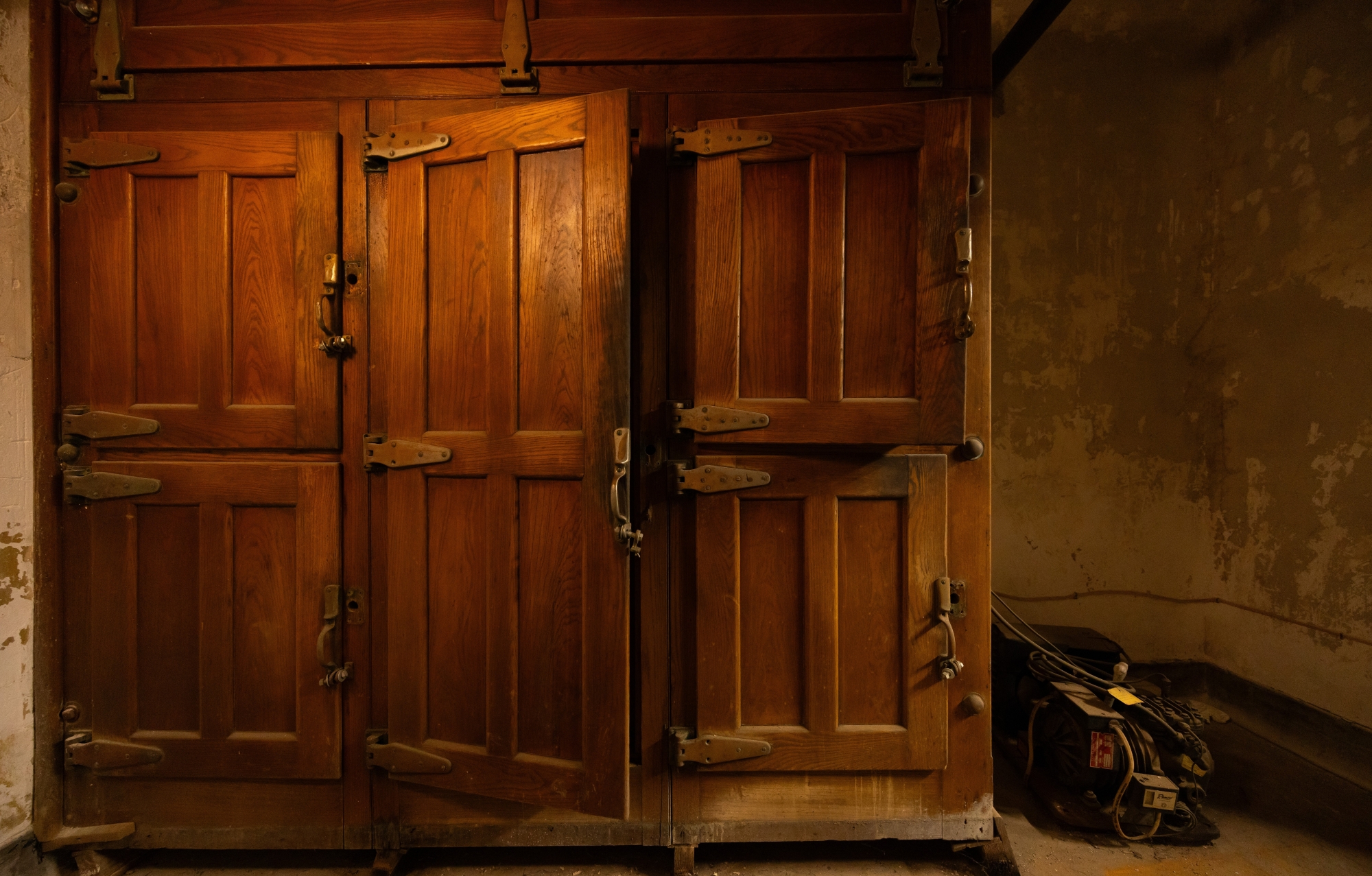
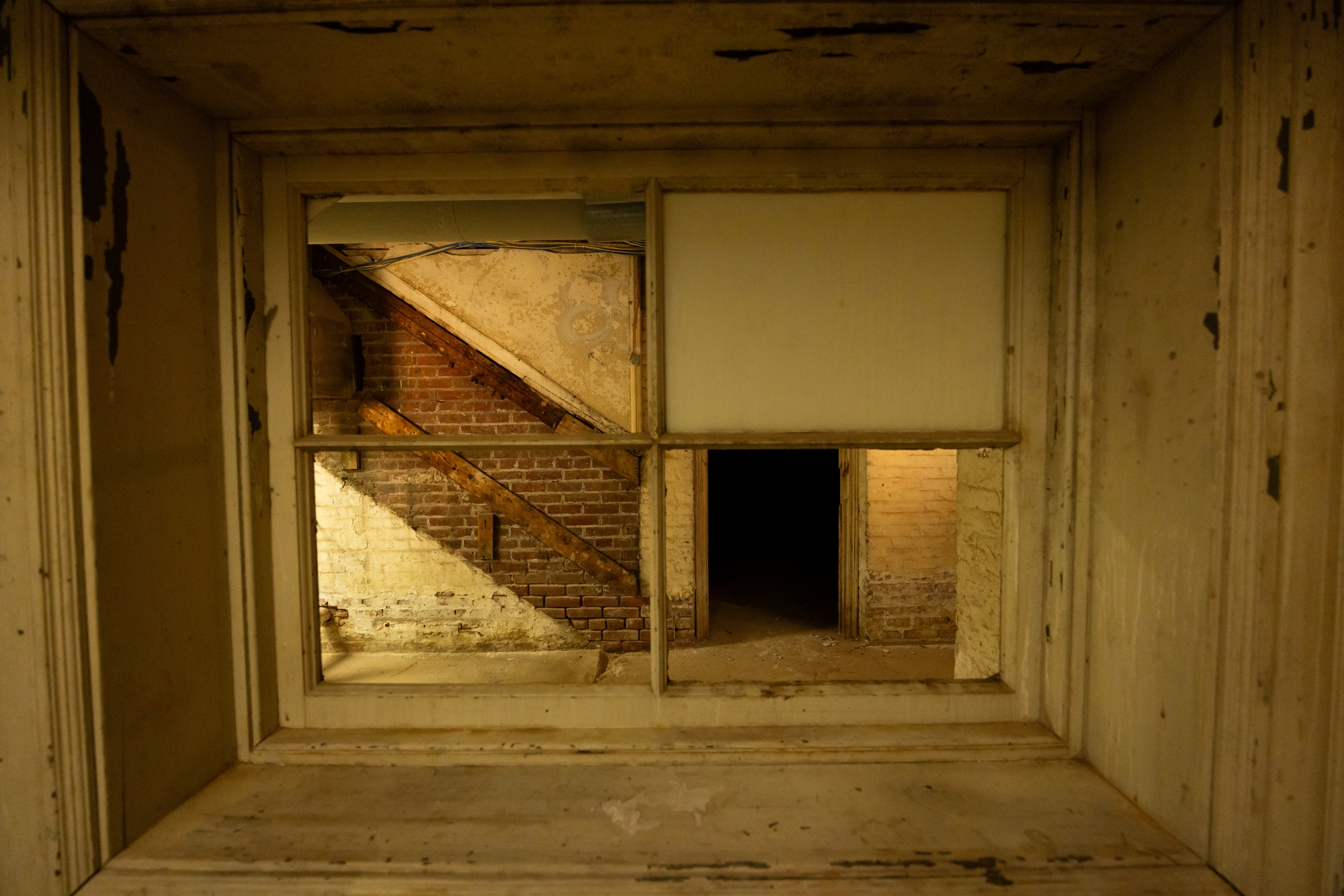
The former exterior entrance to the UPPER HOUSE BASEMENT was sealed off after the construction of Abbott Dining Hall in the early 1960s, but remnants, such as this window (above), set in what was a thick exterior wall, looking through to where a staircase once rose to the ground floor of Upper East.
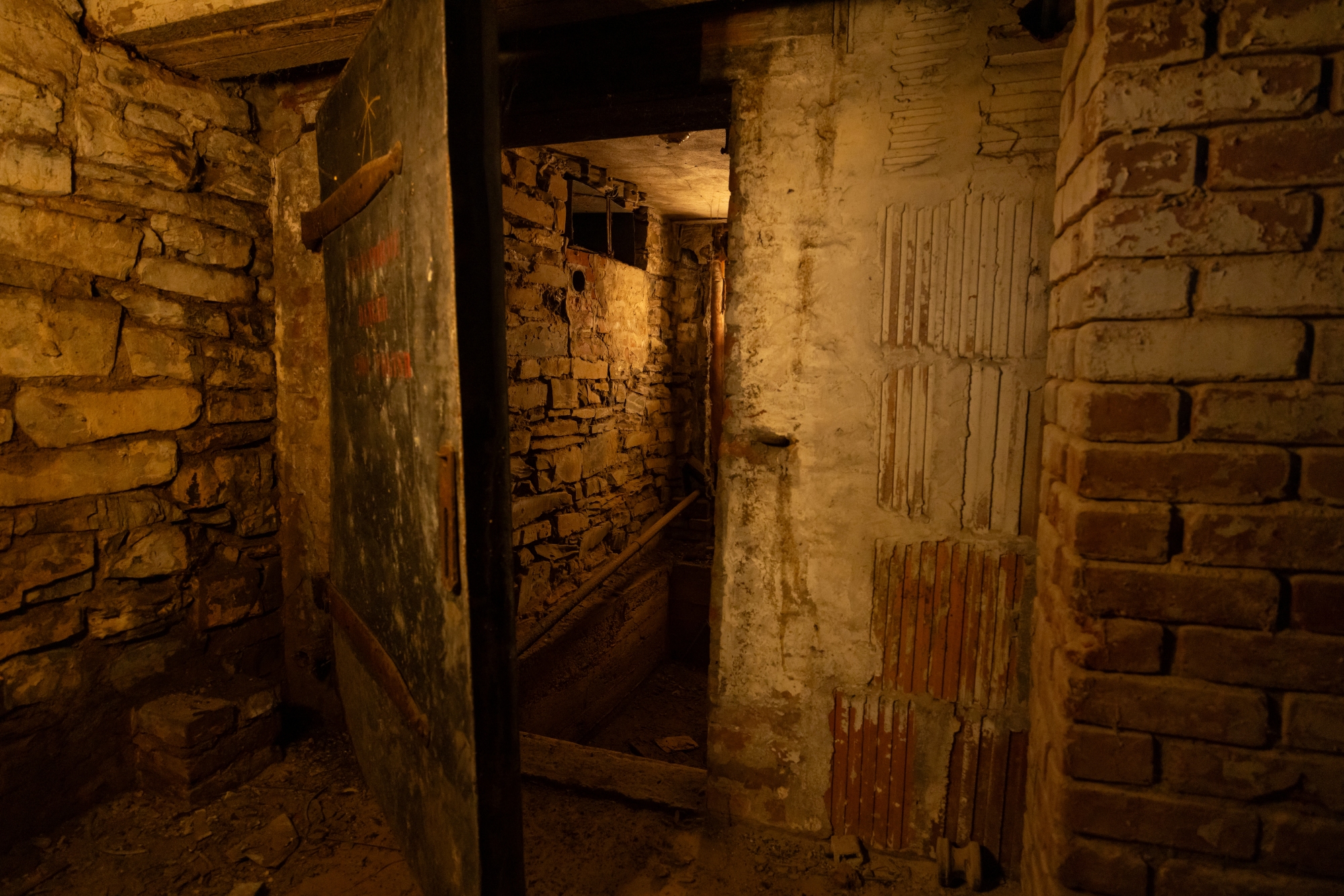
One of the oldest structures on campus, HASKELL HOUSE, built in 1837, was once neighbored by a subterranean icehouse just to the south of the venerable stone structure. It is believed that the icehouse could be accessed by a passageway that led from the basement of Haskell from the spot pictured above, which was converted to a housing for Haskell’s electrical transformer about 100 years ago. Like the icehouse, that housing has also long since been decommissioned, with the only remaining vestiges being the ceramic shackle insulators screwed into its interior walls and the military-style stenciling on the steel door reading “TRANSFORME DANGER 2300 VOLTSR” (sic).
* * *
This story has been updated to reflect the fact that the decommissioned electrical housing in the basement of Haskell House never served as an icehouse. That basement space on the southern side of Haskell did once feature an accessway entrance to the long-gone icehouse.