Encore: Winter/Spring 2026
Shaking Up Shakespeare
The Second Form performance of ‘Much Ado About Nothing’ reimagined 16th-century Messina as a 1930s jazz club, but Beatrice and Bendick still found love.
It’s a rite of passage for stage performers anywhere in the world, right down to the stage of the Kirby Arts Center: You will, at some point, grapple with the works of William Shakespeare. At Lawrenceville, it’s not uncommon for Second Formers to wonder how the Bard’s strange jargon remains relevant in 2026.
Not only does Shakespeare help students “better understand contemporary English,” explains Ian August, who directed Much Ado About Nothing, the 24th annual Second Form Shakespeare, in February, but it also offers the young performers a new sort of theatrical experience.
“The [students] who participate may get a crash course in how art and craft work together to create an experience,” August says, and “for those who attend, they get to see a familiar story told in an unfamiliar way, and that’s something that could spark their imagination.”
Much Ado About Nothing is centered on a battle of wits that transforms into a love story. Seemingly destined to hate each other — and even the mere concept of love — the two main characters, Beatrice and Benedick, bicker endlessly, hurling caustic insults at each and constantly comparing their intellectual skill. However, through their friends’ plots and deception, they miraculously fall for each other.
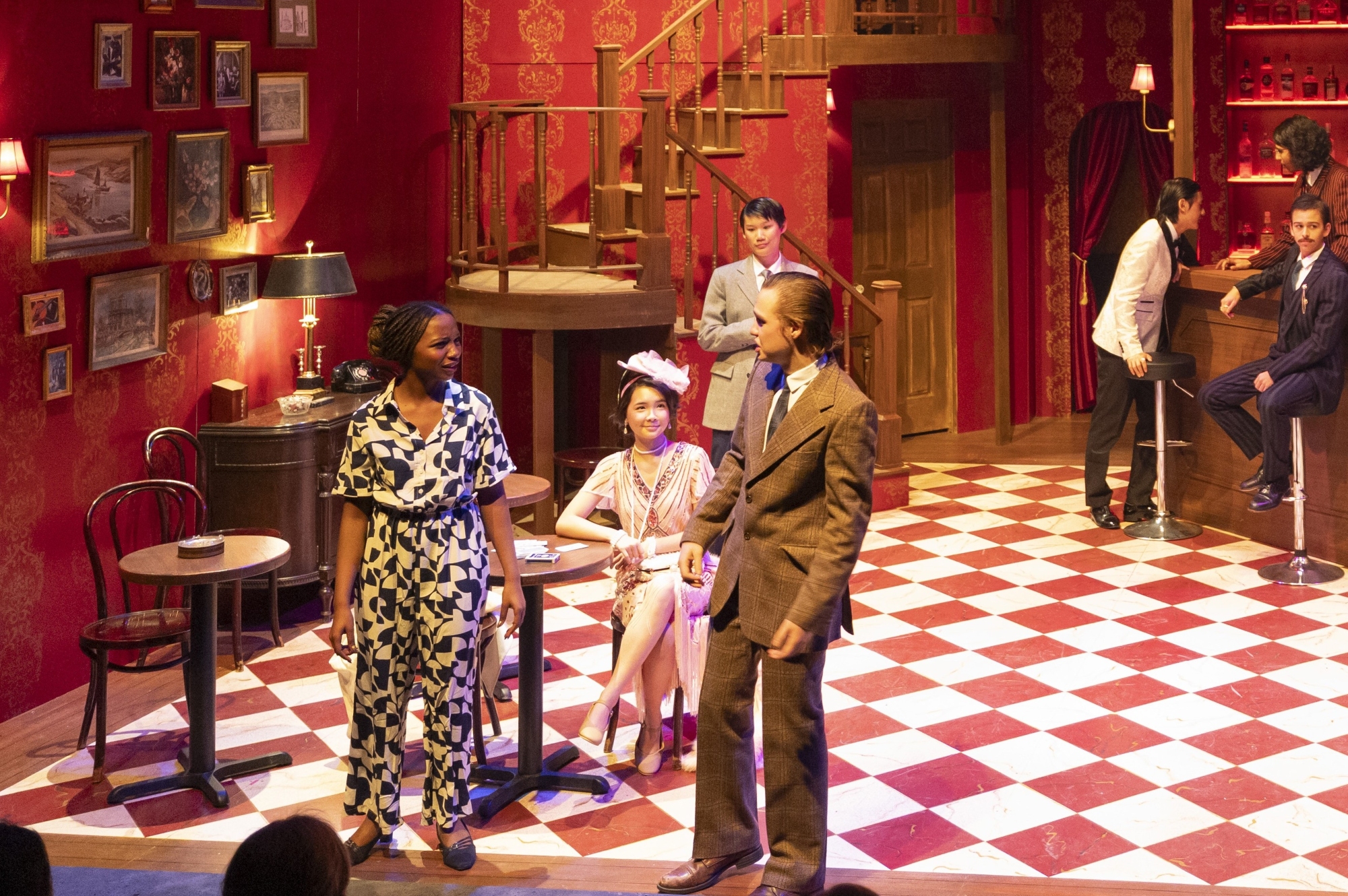
Beatrice, played by Ella Gee ’29, and Bendick (Jack Sharp-Steinbrech ’29) trade barbs before amused onlookers in director Ian August’s adaptation of Shakespeare’s Much Ado About Nothing.
Though he concedes that Bendick can be “annoying” to the audience for much of the show, Jack Sharp-Steinbrech ’29 says the role’s reward is “seeing [his] character change from an
awful man into an actual loving person. Going under the surface of all of that was a lot of fun.”
Ella Gee ’29, who played Beatrice, embraced the Second Form tradition as a measuring stick of her classmates’ personal growth since the academic year began in late summer — whether or not they were part of Much Ado About Nothing.
It “serves as a reminder [of] the parts of their first year they took for granted and how far they have come since then,” she says.
This year, 22 cast members from the Second Form immersed themselves in the world of the dynamic love story, offering many unique and novel experiences.
“This is my first time performing anything Shakespearean, and I am both nervous and excited,” Gee said prior to her debut.
Along with the actors, the directors and stage managers played a large role in bringing Much Ado About Nothing to life, but the scenery may have defied an audience expecting to a comedy at in 16th-century Messina, Sicily.
“Our interpretation […] is much more modern-set in a jazz club in the early 1930s, at the tail end of prohibition,” August says, comparing the adaptation to F. Scott Fitzgerald’s The GreatGatsby, right down to the “music, mobsters, and debauchery.”
— Claire Liang ’29/The Lawrence
Key Moment
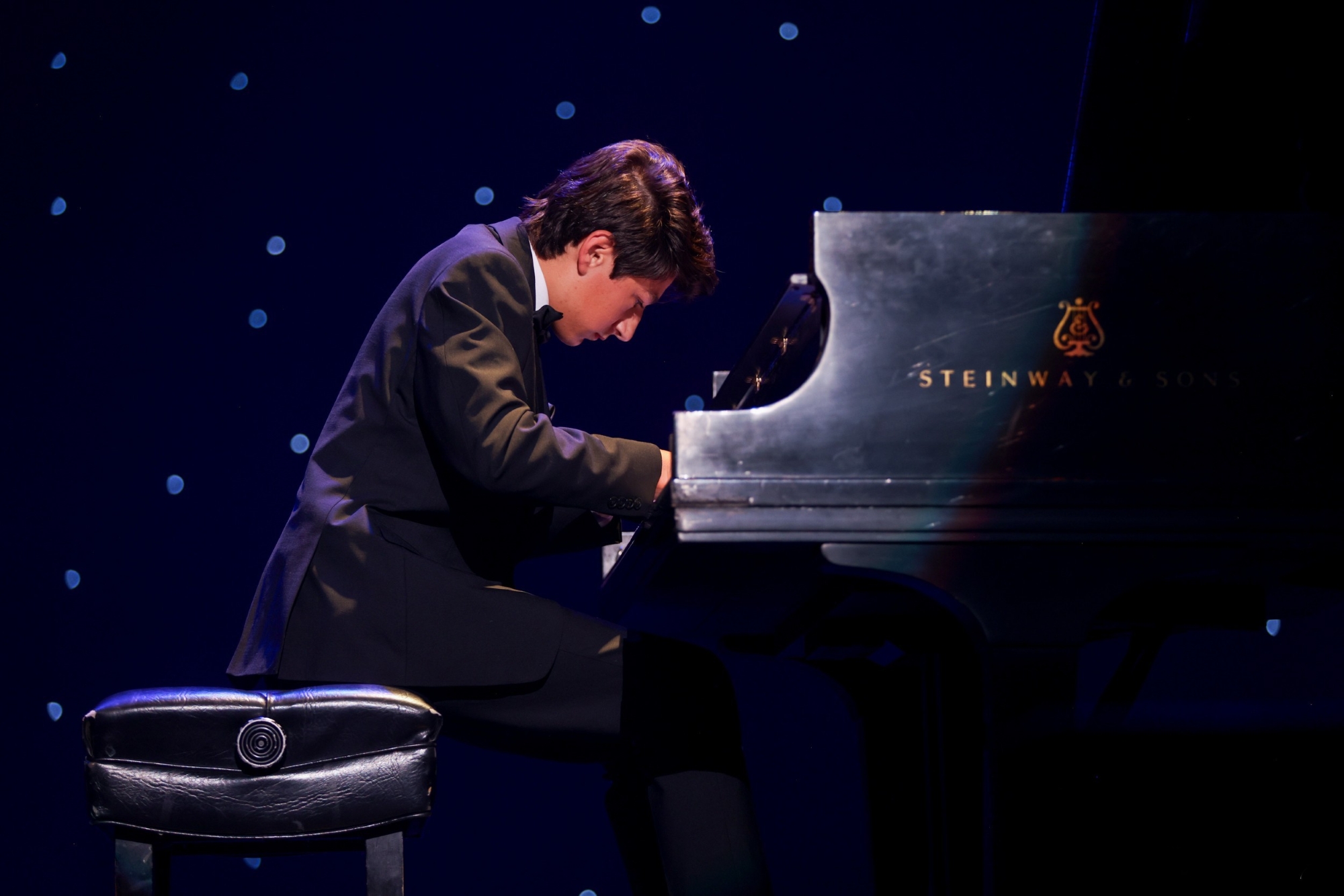
A sterling piano performance of Rachmaninoff’s Prelude in C-Sharp Minor earned Elias Nicozisis ’28 first place in Jersey’s Got Talent at The State Theatre New Jersey in New Brunswick. The win followed his seventh appearance at Carnegie Hall as both a soloist and duet pianist. Nicozisis, who has attended the Juilliard School for the past two summers, has also earned the International Music and Arts Grand Prize, the Young Performers Foundation First Place Award, and the MusicFest Grand Prix.
Alum Provides a Glimpse of Japan
The Hutchins Galleries will present Kaimamiru: A Glimpse of Japan, an exhibition by photographer Nils Huehnergarth ’76 from May 7 to June 4, in conjunction with his class’s 50th reunion on Alumni Reunion Weekend. Through some 50 photographs, Huehnergarth invites viewers on a quiet journey across Japan, from the vibrant pace of Tokyo to the meditative stillness of mountain villages. His images capture moments where light, rhythm, and humanity converge, revealing the harmony between modern life and timeless tradition that defines the spirit of Japan.
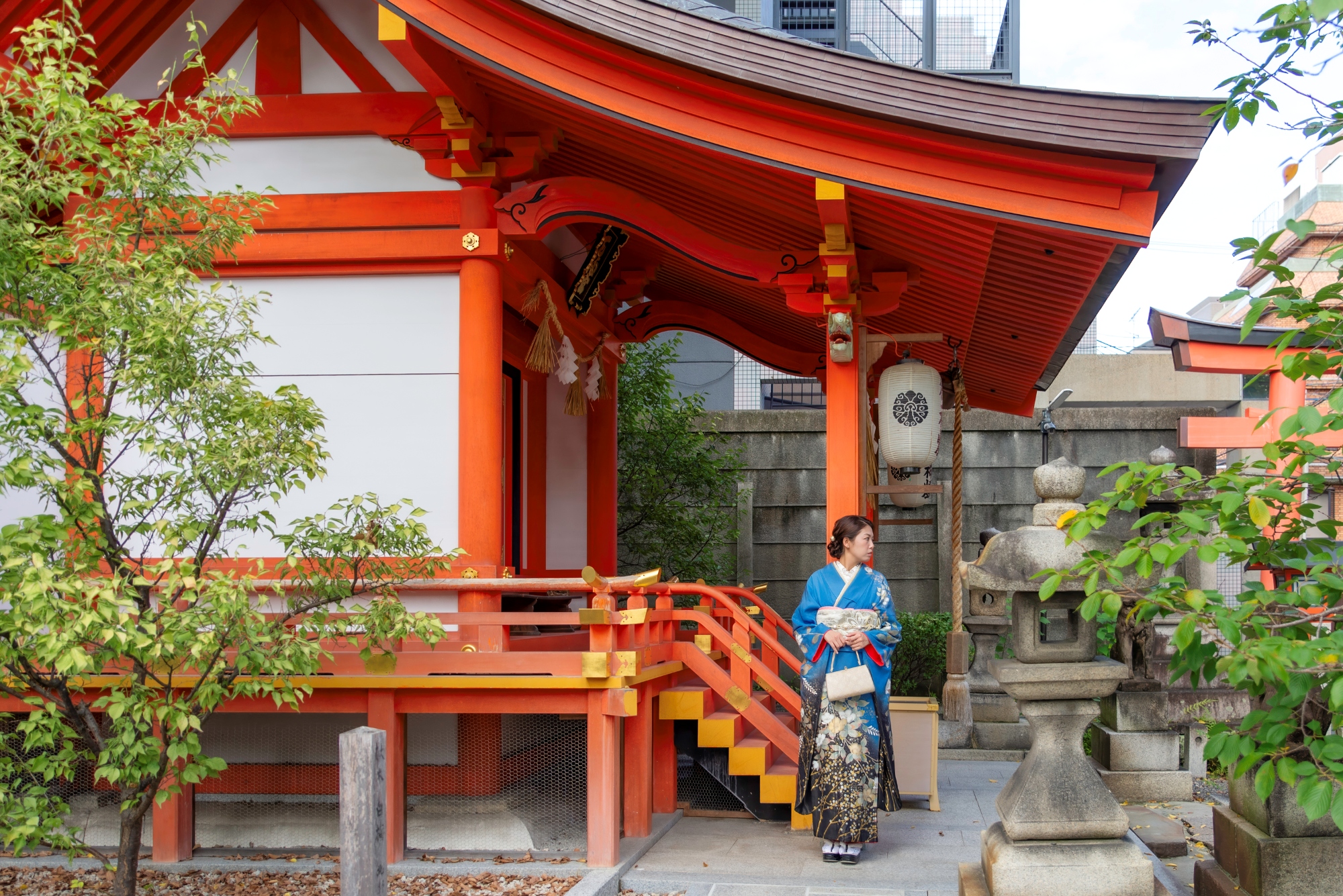
In “Grace at the Shrine,” Nils Huehnergarth ’76 allows the architecture and attire to highlight the elegance of Japanese cultural traditions.
Huehnergarth discovered photography as a teenager, soon after his years at Lawrenceville, learning to shoot black-and-white images on a Leica M3. After college, where he organized an arts festival featuring works by Yousuf Karsh and Ansel Adams, Huehnergarth put his passion for photography on pause to focus on his family and career. But while working for Nokia, then the world’s largest mobile phone (and camera) company, he rediscovered his zeal for capturing the decisive moment, the expressive portrait, and the majesty of natural landscapes.
“At the time, Nokia partnered with Carl Zeiss, the same company that made lenses for my old Leica,” Huehnergarth explains. “That connection reignited my curiosity, and because my job involved extensive travel, I began photographing again wherever I went.”
That travel includes 21 European countries, lands throughout the Americas, and most recently, across Japan, from which Kaimamiru — a verb meaning “to catch a glimpse” — is drawn.
“I thought it was an apt way to describe my brief tour of Japan,” he says.
Huehnergarth calls his opportunity to show his work at his alma mater “deeply meaningful.”
“Lawrenceville helped spark my curiosity and appreciation for art and learning,” he says. “To return with an exhibition that reflects decades of exploration feels both nostalgic and full circle.”