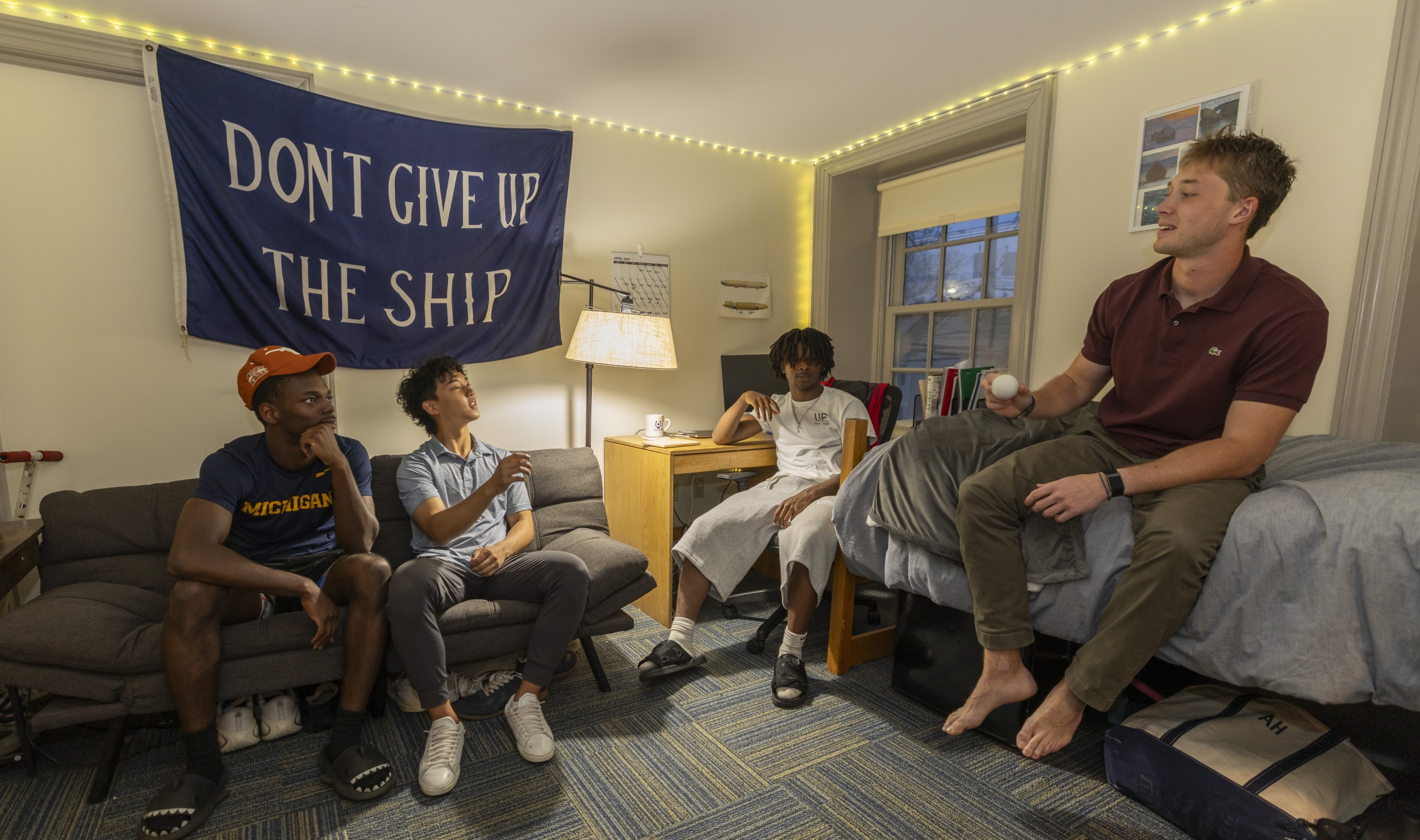
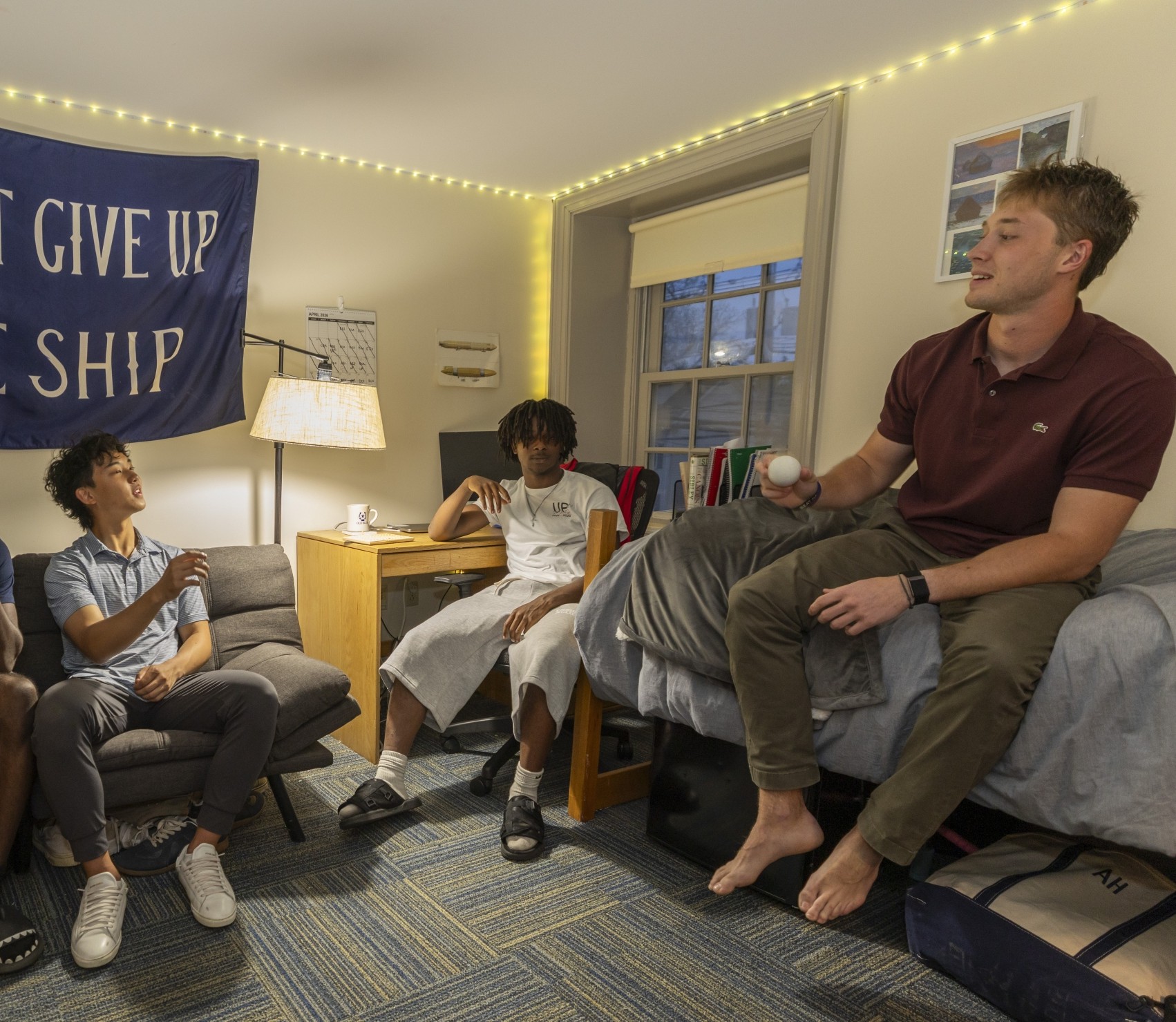
Inside Hamill House, prefect Andrew Hurlock ’26 (right) shares a moment with younger Hamill residents.
‘The Culture Keepers of Our Houses’
Lawrenceville’s Fifth Form prefects provide a steady, relatable hand to younger students in their Houses.
When students arrive at Lawrenceville, they immediately step into a House community intentionally designed to support them, surrounded by a circle of adults and peers working together to ensure they feel welcome and steady in a new environment. Among that team are Fifth Form prefects, student leaders selected and trained to help Second through Fourth Form students navigate daily life in their Houses, living alongside them.
Prefects help set the tone for how students treat one another, how disagreements are handled, and how expectations are upheld — “the pulse holders and the culture keepers of our Houses,” said Holli Olson, assistant dean of students.
Prefects are not disciplinarians, but rather peer leaders trusted to model steadiness and maturity in everyday moments. That trust is reinforced by structure. Preparation begins soon after selection and continues throughout the year, with prefects meeting weekly with Lindsay Mulhern P’25 ’27, the associate dean of students, to discuss challenges, practice scenarios, reinforce boundaries, and support each other. Other campus leaders, including the School’s counseling staff, are often invited to share their expertise.
“We want them to really understand that we’re in this together with them and make sure that they know that the adults are there to support them,” Mulhern said.
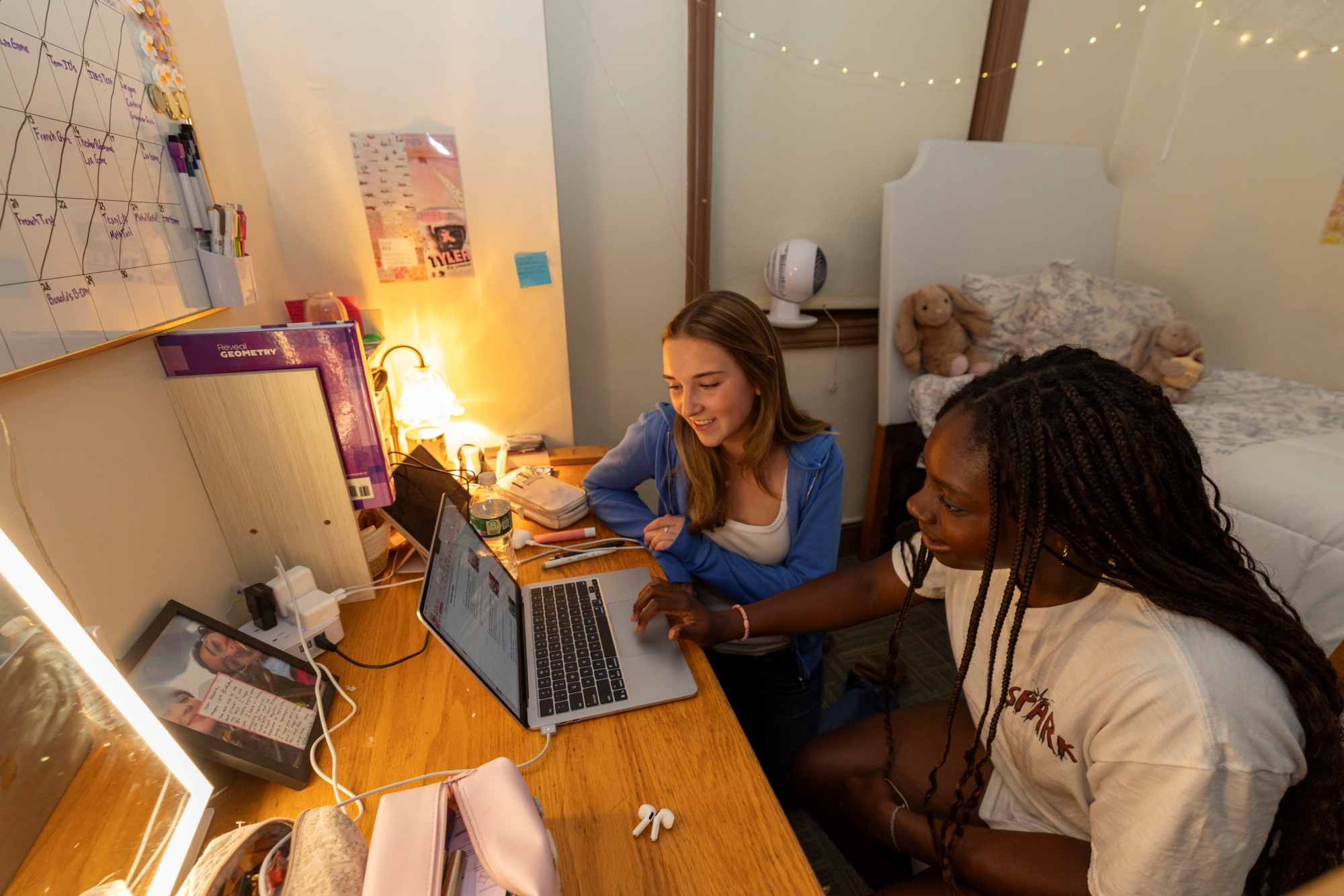
Anne Clifford-Levy ’26 works — and laughs — with a Second Form student in Dawes House.
Prefects are selected not for popularity, but for steadiness, judgment, and care, and their role is both simple and significant: to help newer students adjust, feel known, and understand how life in that House works.
Heads of House say those qualities are often visible long before a student is chosen. They look for strong and authentic connections, students who are kind, approachable, and genuinely interested in the wellbeing of others. The most successful prefects are often calm presences in busy spaces, able to be fun and relatable without losing their sense of responsibility.
“He’s approachable without being permissive, authoritative without being intimidating,” said John Giannikas, head of Hamill House, about prefect Andrew Hurlock ’26. “Someone who listens first, guides thoughtfully, and leads by example rather than instruction alone.”
Balancing peer relationships with responsibility requires mature judgment. Thomas House prefect Marco Pellegrini ’26 said accessibility and being physically present in the House are priorities.
“The biggest thing is to establish yourself as someone that can be easily approached,” he said. “It’s great to joke around with our prefectees and have fun in the House, but it’s important to be able to rein it in.”
Prefects are not disciplinarians, but rather peer leaders trusted to model steadiness and maturity in everyday moments.
The shift to the role of prefect for students remaining in the House where they lived during their Third and Fourth Form years can be complex.
“They have to come back as a leader because they’re working with people who are their friends,” Mulhern said. “We talk to them about how that shift happens, setting boundaries, how you need to now impose the rules and expectations for the people in your House.”
Dawes House prefect Anne Clifford-Levy ’26 noted that while she never picks sides in an argument, she’s always available to listen and share her own experiences.
“When they know I have gone through a similar situation,” she explained, “it empowers them to know they can get through it as well.”