
Playing from a Place of Joy
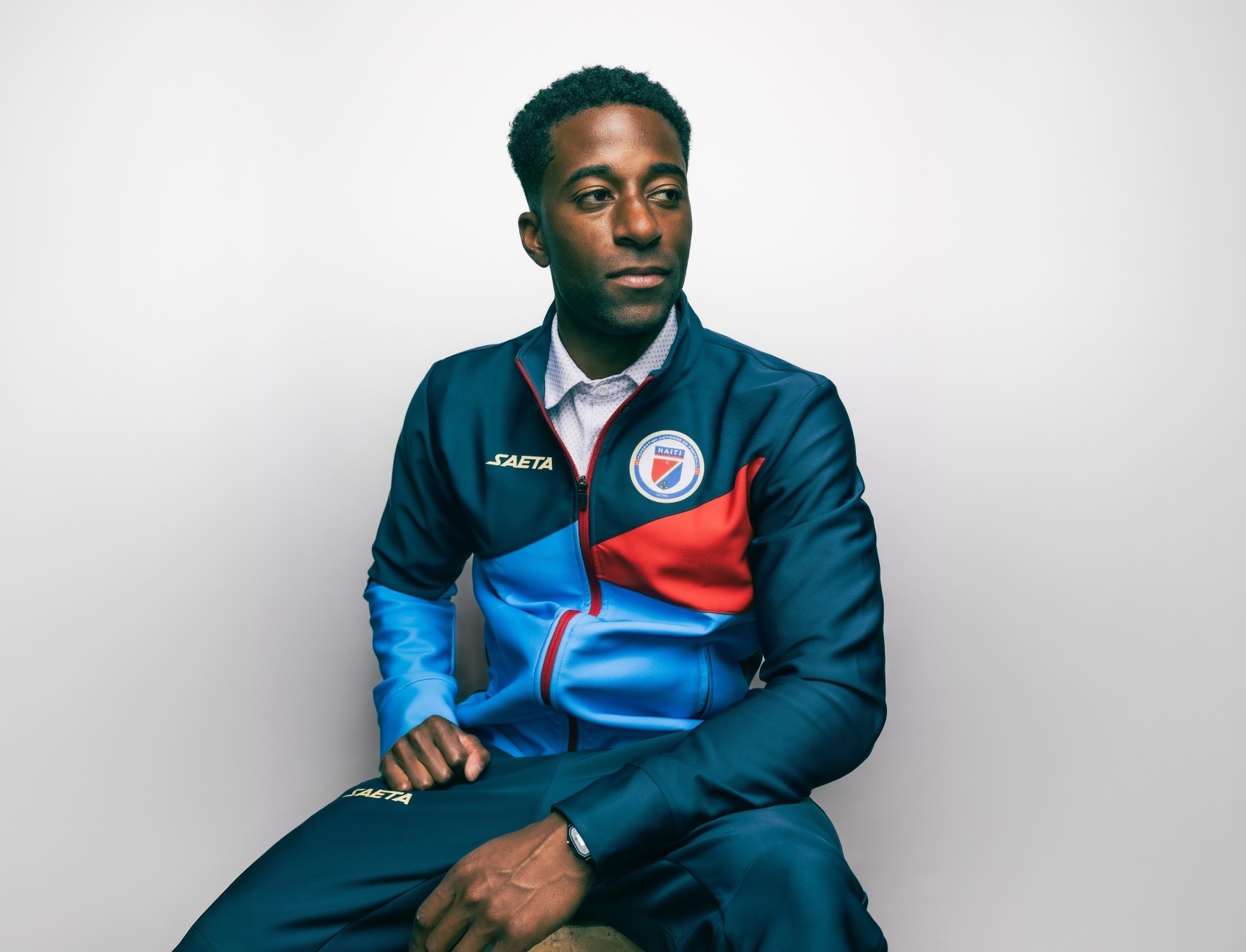
After starring at Lawrenceville and Penn, Markhus “Duke” Lacroix ’11 helped lead the Haiti men’s national team to the World Cup for the first time in 52 years.

When Duke Lacroix ’11 returned to New Jersey last year to see family for the holidays, the talk from his aunties, uncles, and cousins veered toward this summer’s World Cup. Lacroix would be playing for Haiti, which had last made the tournament in 1974. Haiti was where Lacroix’s parents were born and raised. It was his extended family’s home before they moved to New Jersey. The questions that day had an emotion and energy beyond work-related queries. They talked about what this team had done to qualify for the World Cups as Haitians.
That was when Lacroix realized the significance of what he would do in six months.
Lacroix, who has played soccer professionally since 2015, wasn’t bothered by pressure. He knows what that feels like. Lacroix contemplated retirement after tearing his anterior cruciate ligament early in 2017. Club soccer, he has come to learn, has expectations.
The World Cup, watched by billions worldwide during its five-week run in North America, was more of a celebration for Lacroix, a 32-year-old defender.
Because Haiti was not under heavy pressure to excel like Brazil, France, or even the United States, “every win, every sort of celebration is icing on the cake,” La Croix says. “It’s essentially a free swing. Just getting to the World Cup was the challenging part and honor in and of itself.”
In other competitive environments, Lacroix says, the pleasure of play gets dimmed. “Some of the other factors, the volume is turned higher,” he explains. “You still enjoy it, but the voice of doubt is higher and there’s more pressure.”
Haiti, whose group included Morocco, Scotland, and five-time cup winner Brazil, didn’t play in the country during its qualifying run. Lacroix was born in New Egypt, N.J., but soccer has allowed him to connect with the teammates and fans despite the language barrier. The support and love were apparent at every stop.
“I’ve been fortunate to play in some really great places, really great clubs and communities, primarily in the U.S.,” he said. “In Europe and other places, there’s a different identity. … The history is a lot longer. You have generations and generations of fans who live the sport. In the U.S., soccer is a bit newer.
“For Haitian supporters, when you support your country, it’s an anchored identity to who you are, who your parents were, your historical lineage. That makes it much more special: You’re playing for your own personal identity.”
For Haitian supporters, when you support your country, it’s an anchored identity to who you are, who your parents were, your historical lineage.
As if this weren’t enough, Les Grenadiers’ June 19 match against Brazil was played at Philadelphia’s Lincoln’s Financial Field, easily drivable from New Jersey. And the team practiced at the University of Pennsylvania, where Lacroix starred for the Quakers’ soccer team. He earned All-Ivy honors all four years, graduating in 2014 with the fifth-most points in school history. That followed an honors laden career at Lawrenceville, where he led the team in scoring all four seasons.
After Philadelphia was announced as a World Cup site — “I thought someone was pulling my leg,” Lacroix says — his phone was slammed with texts. “That’s where a lot of my family and friend support are,” he says. But Lacroix was unsure he could see everyone. He feared downtime might be scant.
It seemed like there had been nothing but time. Seven months spanned between Haiti’s qualifying for the World Cup and the start of the tournament, with Lacroix feeling “extremely antsy” to play as June 13 drew near.
“You kind of visualize and dream how it will unfold,” he admits with a laugh. “You’re dreaming of glory, so to speak, and what you’re going to do, and what you’re going to execute.”
Lucky for Lacroix, there was plenty to do: A fourth season with the Colorado Springs Switchbacks FC of the United Soccer League, which allowed him to sharpen his skills for the World Cup; serving as the USL’s players association president, helping land a tentative collective bargaining agreement after 18 months of negotiation with the league; and, far less triumphant, recovering from a calf injury.
Ultimately, Haiti was eliminated from the competition during group play in June, but Lacroix was prepared for the experience of a lifetime. After all, it was the World Cup, the beautiful game’s biggest stage. He knew what was required: “I’m getting to play from a place of joy.”
* * *
Pete Croatto is a freelance writer based in Ithaca, N.Y.