On Progress
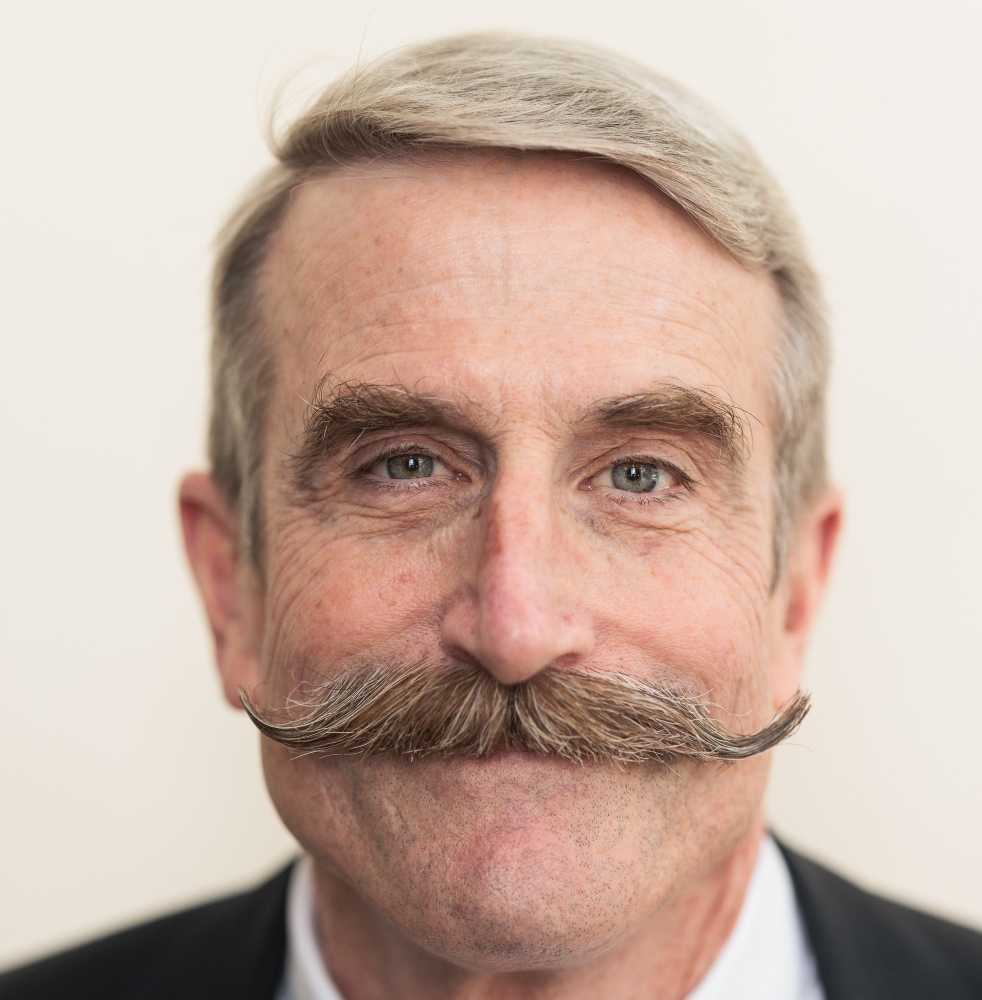
When I was a freshman in college, my roommate and I took a drive up into rural Vermont to pay a visit to the old homestead where his father had lived many years earlier. While there, we bumped into Mr. Bloom, a spry farmer well into his 80s, who had been a neighbor and had known my roommate’s father before he died. And he took us on a walk around his small property where he grew his own food and kept himself busy with projects.
The first stop was “the smithy.” Mr. Bloom explained that he had found an old crank bellows in the woods, all seized up with rust. He took it apart, cleaned it, and made it work. He had likewise found an iron sink, again, in the woods, which he had fashioned into a forge. He then showed us how he had cast all of the fittings, hinges, and door fixtures that he needed around the farm, by melting down bits of scrap metal.
A little further on, he showed us his sawmill, set up with a large circular saw blade — that, too, salvaged from a junk pile. With an engine taken from an old abandoned car, he had rigged up a belt drive to power the saw.
Finally, he showed us a cabin he had built entirely by hand without a single nail. Most of the wood was scrap lumber, carefully pegged or fitted with dovetail joints. And the door handles and hinges — all crafted just a few steps away, using the forge.
As an 18-year-old college kid, I was in awe of Mr. Bloom, or more accurately, envied him, with his remarkable Yankee ingenuity and self-sufficiency, and the simplicity of his life. The modern world had passed him by, and I think Mr. Bloom was happier and better for it.
At the same time, as I have reflected on this memory over the years, I have come to think that the allure of this simple life may be more complicated than it first appears. To be clear, such a lifestyle can be a deeply satisfying and meaningful commitment — whole communities like the Amish have sworn off certain technologies and have freed themselves from the frenetic pace of life that so many of us are resigned to, and that indeed is a laudable, principled choice.
As an 18-year-old college kid, I was in awe of Mr. Bloom, or more accurately, envied him, with his remarkable Yankee ingenuity and self-sufficiency, and the simplicity of his life.
And yet, practically speaking, all humanity cannot flee modernity, dwelling on small subsistence farms, heating their homes with woodburning stoves, and tinkering in their barns. Given the world’s population, we need the efficiency of modern cities, where people are housed in relatively small spaces, where water supply, energy, and waste disposal can be managed at scale, and which in turn frees up the space for larger farms to produce the quantities of food needed to even have a shot at feeding the world — an elusive goal at best, but one that, for the first time in human history, may be attainable.
Now, make no mistake: Cities bring their own considerable set of problems with which we must contend. And as for food production, are we necessarily better off with genetically altered strains of wheat that allow for greater quantities of bread?
Is “progress” then, for every “two steps forward,” we take “one step back”? Or at times, is it even, “one step forward, and two steps back”?
My point here is neither to be an apologist nor a skeptic for ever-advancing human technologies. It is simply that I have come to think that what we call “progress” is neither good nor bad — at least not inherently. It’s what we make of it. Wishing things would stay the same, wishing things would stay reassuringly familiar, is unrealistic at best, and can even leave us woefully unprepared to manage the change when it does happen. And inevitably, change will happen, for better or for worse.
Human history, from the dawn of time, is filled with countless, significant challenges that societies have had to confront when faced with progress. The lesson here, and the source of my enduring faith and hope, is neither about blindly embracing progress, nor is it about rejecting innovation because it often has a downside. It is more about the remarkable resourcefulness and resilience that the human spirit has shown over time, helping us, not simply to persist in spite of the challenges, but to thrive.
Sincerely,
Stephen S. Murray H’54 ’55 ’63 ’65 ’66 ’16 P’16 ’21
The Shelby Cullom Davis Class of 1926 Head of School
* * *
Excerpted from the May 2026 Baccalaureate Address, inspired by the complexity of the technological landscape our graduates face and the accelerated pace of change that comes with it.