
Hannah-Marie Garcia-Ladd ’15 is the director of the Indigenous Sentinels Network Program of the Aleut Community of St. Paul Island Tribal Government in Alaska.
Conservation Through Collaboration
For Hannah-Marie Garcia-Ladd ’15, building bridges between the Indigenous and scientific communities in Alaska is at the core of her work.
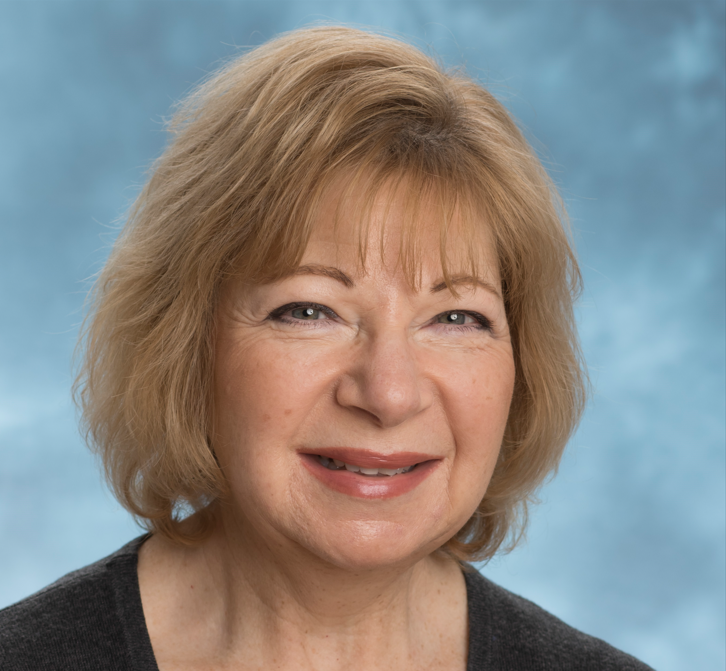
Ecology, global politics, research, diplomacy, education, project management. Trying to define what Hannah-Marie Garcia-Ladd ’15 might do on any given day is like playing Whac-A-Mole.
“I’ve always known what I wanted to do, but it was an ecology class at Lawrenceville that solidified it for me,” says Garcia-Ladd, the director of the Indigenous Sentinels Network (ISN) Program of the Aleut Community of St. Paul Island Tribal Government in Alaska. “A lecture [former science teacher] Jim Serach P’10 gave on population dynamics — on how you can’t just focus on ecology or wildlife but need to consider the human component and how it all ties together — was my ah-ha moment.”
Backed by her bachelor’s degree in environmental studies and anthropology and a master’s in marine policy, Garcia-Ladd describes herself as “an environmental and social scientist.” Building bridges between the Indigenous and scientific communities is at the core of her work, and helping to protect a native culture that relies on St. Paul’s natural resources is where Garcia-Ladd’s work intersects with science, government, and community outreach.
St. Paul Island is located in the middle of the Bering Sea, a 42-square-mile piece of land 300 miles from the Alaska mainland and 800 miles southwest of Anchorage, the nearest urban center. St. Paul is one of two inhabited islands in the five-island Pribilof chain, sometimes called the “Galapagos of the North” for its biodiversity. The islands are populated by fur seals, arctic foxes, sea lions, reindeer, and, during the warmer months, some 300 species of migratory birds. It is a fisherman’s paradise.
The Aleut Community of St. Paul first began monitoring wildlife species and environmental conditions in the Pribilofs in the early 2000s, developing specialized software for data collection and establishing the Bering Sea Research Center. Garcia-Ladd guides tribal communities statewide in launching similar surveys by leveraging the St. Paul software to implement their own monitoring programs. The long-term environmental and economic impact of these initiatives has far-reaching implications for the residents of Alaska’s remote communities and, potentially, the rest of the Arctic region.
“Visiting researchers will base their recommendations on a single season’s worth of data without regard for the input of the community or the local culture,” says Garcia-Ladd, explaining the need to play liaison between the scientists and the Indigenous communities. “With the scale of what we’re witnessing, we need all sources of information. There’s a lot of trust-building involved.”
I wear a lot of hats – community outreach, presenting at conferences, meeting with funders, networking, collecting data, connecting with Fish and Wildlife – and operating in all these spaces requires a certain comfort level in having these conversations. Lawrenceville gave me that.
Based in Cordova, an Alaskan coastal city of 2,300 accessible only by plane or boat, and with an office in Anchorage, Garcia-Ladd makes the trip to St. Paul once or twice a year, staying one to two weeks and typically traveling with an intern, a staff member, and a research scientist. They gather
data on weather, contaminants, and conservation efforts, and Garcia-Ladd leads education and outreach sessions with the local residents. The flight to the island might take from six to ten hours, including a stop to refuel.
“We were in the middle of COVID when I first moved up here,” Garcia-Ladd says. “I asked how going virtual was affecting what they did, and they laughed. They said their work is always like that because of the distances.”
In the meantime, Garcia-Ladd’s job continues to grow and evolve.
In June 2024, the Aleut Community of St. Paul and ISN announced a $2.3 million grant from NOAA, the National Oceanic and Atmospheric Administration. Garcia-Ladd was instrumental in securing the grant, which seeks to leverage the partnership between ISN, the Bering Sea Research Center, and Iḷisaġvik College, Alaska’s tribal college, to support “climate resilient workforce development.” The funds will be used to expand Indigenous-led climate monitoring programs.
Calling the NOAA grant her “greatest accomplishment” so far, Garcia-Ladd credits opportunities like Lawrenceville’s Open Door Society with giving her the confidence to approach Alaska’s senators for their support.
“I wear a lot of hats – community outreach, presenting at conferences, meeting with funders, networking, collecting data, connecting with Fish and Wildlife – and operating in all these spaces requires a certain comfort level in having these conversations. Lawrenceville gave me that,” she says.
A grant to develop a one-credit course with the University of Alaska at Fairbanks, teaching ISN’s data collection methodology, is taking Garcia-Ladd in yet another direction, and in 2023 she joined Indigenous leaders in New Zealand for the signing of declarations to protect the rights of whales and to use Indigenous ancestral knowledge for the betterment of future generations.
Acknowledging the value of ancestral knowledge alongside the contributions of western science has been significant for Garcia-Ladd on a personal level, as well.
“I am constantly looking at how others are utilizing the space they call home and seeing how that factors into identity,” she says. “That’s led to me recognizing my own identity [Hispanic and Native American] and the cultural practices that have been lost in my own family.”
Garcia-Ladd says it took a move to the 49th state for her to feel like she was home.
“It’s not for everyone, but I loved it immediately,” she says. “I crossed the [state] border and began crying. I just knew this was where I was meant to be.”