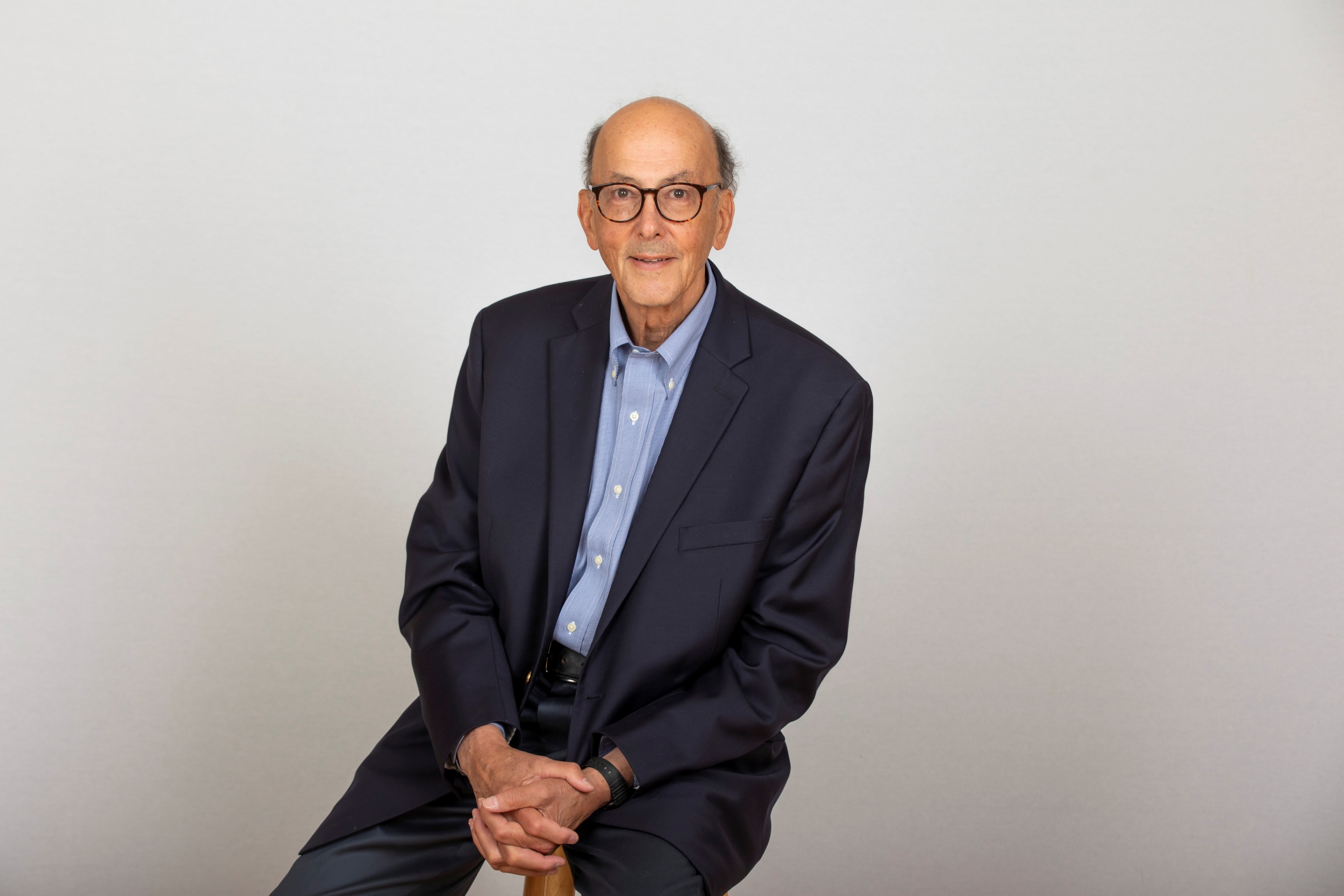
Roger I. Glass ’63, M.D., Ph.D., was honored with The Lawrenceville Medal by the Alumni Council on May 15.
‘Take Science Where the Problems Are’
Roger I. Glass ’63, recipient of Lawrenceville’s Aldo Leopold Award, encouraged students to find their paths and make a difference.

Renowned physician scientist Roger I. Glass ’63, M.D., Ph.D., was awarded The Lawrenceville Medal in May. The medal, presented by the Alumni Council and also known as the Aldo Leopold Award, is the highest honor the School may grant, conferred upon an alum who has demonstrated “brilliant, lifelong work in a significant field of endeavor.”
But Glass, who formally received the medal at a dinner on May 15, was not on campus strictly to be fêted. He also spent the day speaking to Lawrentians in classrooms and at the final School Meeting of the academic year in the Kirby Arts Center.
“My English class at Lawrenceville taught me you have to take the path less traveled – that’s what I did,” he said. “Find your path and think about making a difference as you go forward.”
Glass spent more than four decades in global health, including leadership roles in public service, research, capacity building, and international collaboration. His nearly 17 years heading the John E. Fogarty International Center is the longest tenure for any director of the organization, part of the National Institutes of Health, which supports international medical and behavioral research and to train international researchers.
His time at Lawrenceville changed the trajectory of Glass’ career, he said. After completing his bachelor’s, master’s, and medical-school requirements at Harvard, Glass earned a doctorate from the University of Gothenburg in Sweden. His subsequent career experience took him to underserved areas around the globe. After taking a role with the Centers for Disease Control and Prevention, Glass and his wife, Barbara J. Stoll, M.D., a distinguished professor in the medical sciences and professor of pediatrics, and former dean at McGovern Medical School in Houston, went to work in Bangladesh at the Diarrhoeal Disease Control Center.
“It was an eye-opening experience and changed our careers,” Glass said. Describing his contributions toward developing a cholera vaccine, Glass underscored the importance of vaccine science for global health effectiveness.
“When our kids were children, they received seven different vaccines,” he said. “Today, there are more than 30 that have been developed, and it’s a terrific advancement of science.”
Noting that his work in virology, immunology, and genetics all influenced his path to develop and implement vaccines in low- and middle-income countries, Glass also described how a strong partnership with the Gates Foundation helped lead to equity in vaccine availability throughout the developing world. He encouraged students them “take science where the problems are and follow your passion. “I never thought I’d be working on enteric diseases, but having experience in the world and working in poor, developing countries is important,” he said.