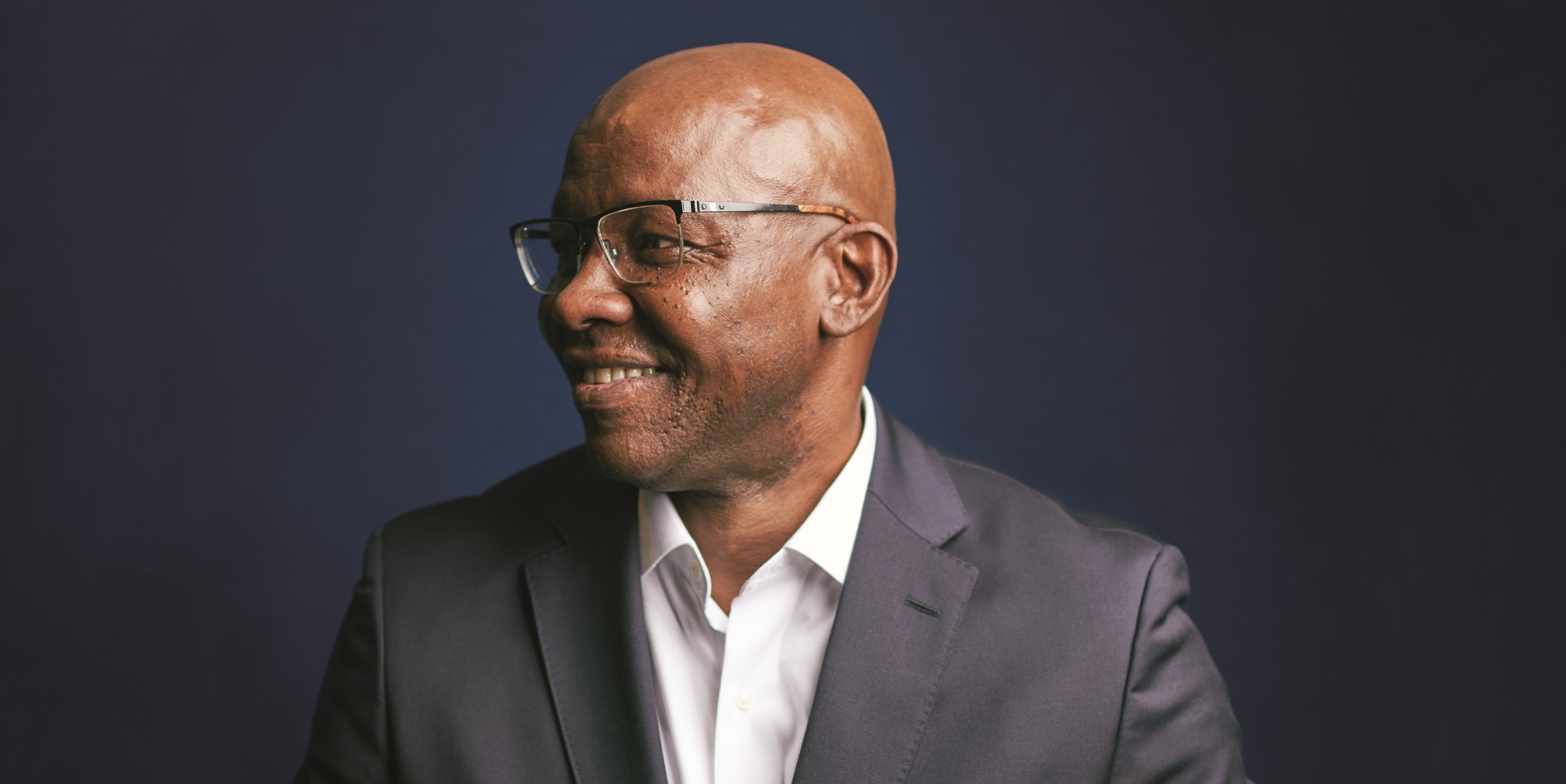
They Can’t Guard You, Garry!
There was a time when hall of fame journalist Garry D. Howard ’77 couldn’t get a job in sports. That’s when he decided to become the boss.

PICTURE THIS.
You were a guy from Mitchel Houses on East 135th Street in the South Bronx, but now there you are, underneath all the world you’ve ever known, in Sydney, Australia. You’re set for a round of golf at the bidding of your friend, NBA and U.S. Olympic basketball superstar Ray Allen, the hometown luminary you’re there to cover for your newspaper. Stepping out of your cab, you see Ahmad Rashad and Quinn Buckner, former heroes of the NFL and NBA, respectively, and you say to yourself, This is going to be a good foursome.
And then it gets interesting.
Another car pulls up to the clubhouse, disgorging more members of the Olympic Dream Team — Jason Kidd and Alonzo Mourning, among others — and you think, Wow, this is going to be a great day!
Then, while you refine your putting stroke on the closely cropped practice green, one more car arrives, from which two men in dark shades emerge with earpieces in place. What the hell is … who is this, now? is what you wonder, even as you turn back to your putter, before you feel someone behind you. You’re a New Yorker, and when somebody walks up on you, well, you have an instinct. Wheeling quickly around, you see a man politely offer his extended right hand, saying, “Hi, I’m Bill Gates. I came to play with Ray Allen … you’re Garry, right?”
For once, you’re at a loss for words before you pick up the slack in your jaw. “Yeah, I’m Garry,” is what you manage. “I’m the sports editor at the Milwaukee Journal Sentinel. Ray got me out here because he wants something. Now I see why…”
It’s the first night of the 2000 Summer Olympics. The next day, you file your column: Golfing with a Billionaire: Priceless. You’re Garry D. Howard ’77, and you cannot quite believe where life has carried you because the thing is, none of this is all that unusual. You know these guys — well, maybe not the Microsoft dude — because you’re someone they admire. Just a half dozen years before, you became the only African American sports editor at a major metropolitan daily newspaper in the United States, and that means something to them. It means something, period.
And just a decade before that, you couldn’t get a job in journalism. Period.
Yeah, picture that.
* * *
“YOU WANT to make sure the things you’re telling the children, you’re not selling them a bill of goods. You’re giving it to them straight up,” says Ann Boone Howard P’77, who raised her son Garry and five other children in the Mott Haven section of Bronx, New York. “Because life, as I used to tell them, is much harder than you think it is.”
Being a Black man is an immutable part of Garry Howard’s story. He will tell you with a voice that thunders and rises with excitement about the very fortunate life he has lived, and it becomes clear that the color of his skin is integral to that narrative. Howard has faced racism — faced it down, in fact, never afraid of the fear he knows it masks — but remained determined to seize the career he knew he deserved, because he knew he was the best at what he does. Once it was clear his blackness was keeping him from the newsroom — and given his schooling, his résumé, his talent, it seemed like the only plausible explanation — Howard knew what he had to do. If he wanted to beat the boss, he needed to be the boss.
* * *
ANN PUSHED Garry because she knew he had the ability to do great things, whatever they would be. She wanted him to be able to make his own choices.
“I was the parent like this: If you brought home a 99, I wondered what was happening with the hundreds,” she says. “If you brought home a B-plus, I wondered what happened where they weren’t giving out the A’s today. I was that type of parent, so I always pushed them.”
Bright and ambitious without much prompting, Garry D. Howard — the “D” stands for Douglas, and Ann likes him to use it — was the valedictorian of his elementary school, P.S. 154. As a sixth grader, he was reading at a twelfth-grade level. After seventh grade, he was skipped ahead to ninth. That year, Howard caught the attention of A Better Chance, a program devoted to identifying and developing students of color to become leaders, first by placing them in some of the nation’s finest secondary schools. After scoring high on the Secondary School Admission Test, Howard was summoned to the guidance counselor’s office. Lawrenceville had offered him a four-year scholarship.
“I knew nothing about it. I asked where it was, and they said, Jersey,” he recalls. “I said, ‘Well, how the hell am I supposed to get there?’”
Well, you’re going to live there.
“Live where?”
Live in Jersey.
Nope.
“But when I got home, my mother already had the letter from A Better Chance,” he says. “She already went shopping and bought me a suitcase.”
Howard was apprehensive. “I was like, what am I doing? I haven’t been around white people,” he recalls. “I haven’t been around anyone who didn’t look like me.”
Howard threw himself into Lawrenceville right away. ‘I just bought in 100 percent,’ he says. ‘I was just blown away by it all.’
Howard’s first interaction with the School on a four-day visit that April was punctuated by a forthright conversation, and it made a lasting impression on him.
“The first thing I heard was, ‘We know we don’t have many Black students, but we’re here to support you,’” says Howard, one of what he recalls as perhaps a dozen African American students at Lawrenceville in the fall of 1973. “‘If you feel uncomfortable, we know what it’s like. We know what we’re asking you to do,’ so they spoke to the race thing immediately.”
Howard threw himself into Lawrenceville right away. “I just bought in 100 percent,” he says. “I was just blown away by it all.”
That isn’t to say that the issue of race wasn’t present. What continues to menace American culture today was no less evident in the early 1970s, and Lawrenceville was experiencing its own growing pains. Howard recalls an unfortunate instance in Thomas House during his first year, but also the response of the School that had pledged its support.
“Somebody said, I have the N-word living next door to me, and I hit him,” says Howard, who injured his elbow in the ensuing scuffle. “But that was the last time, because I let him know, ‘Dude, it ain’t going to be like this, all right? I’m here, and I don’t care!’”
Early on, Howard also found mentorship in English Master Max Maxwell H’74 ’79 ’80 ’81 ’91 and his wife, Barbara Maxwell.
“He told me how this is going to change my life, that this is a level of education only a few in this world will ever get,” Howard recalls. “If they offer it to you, that means you have the talent to be able to do the work, and all you have to do is make it all work for yourself.”
Howard was growing and expanding his horizons. Already a talented basketball player, he decided to take to the ice, too.
“I bought a pair of skates from the Jigger Shop, Bobby Hull skates, and I wanted to learn how to skate,” he says. “I had Wednesdays off, so I’d get up every morning and go skate, the only one in the rink.”
Next, he played pickup hockey before deciding to go out for the Big Red. The day before his first game, fellow Third Former and Dickinson housemate Ray Sphire ’77 helped outfit Howard in some additional hockey gear, offering his helmet and pricy Koho gloves. Howard resisted, but his friend insisted.
“He said, ‘I want you to have the best,’ and he let me wear them the whole season,” he recalls.
The next day, Ann arrived at Loucks Ice Arena to see her son make his on-ice debut. She was carrying a pair of CCM Tacks skates — the gold standard.
“Tacks were the best skates you could buy,” he explains, contrasting them to the bargain pair he had purchased earlier. “I said, ‘How did you even know about Tacks?’”
Howard vividly remembers Ann’s reply: “I called Mr. [Robert] Ainspac [H’76 P’77 ’85] and asked him, ‘Which are the best skates? Because I’m going to get my boy some new ones.”
To Howard, the love of his family and the support of the Lawrenceville community were dovetailing in a meaningful way.
“I mean, oh my gosh, that’s when I learned that I’m here, and this school cares about me,” he says. “I knew what I had in front of me; it was sort of like, this place is going to set me free. It’s going to set me on a different arc on my life, just like my mother said.”
* * *
HOWARD DISCOVERED journalism at Lehigh University, where he also played basketball, and quickly became a star. He earned a coveted summer internship with the Dow Jones News Fund, the first Lehigh student ever to do so. Dow Jones News Fund had sponsored the program since 1963, sending talented student journalists to some of the nation’s top newspapers every year, but had never actually taken an intern for its own News Service, which includes The Wall Street Journal, before Howard became the first in 1980. It was unprecedented.\
The managing editor of Dow Jones News Service praised Howard and his work, lamenting the fact that he had another year of college.
“He told me, ‘You know, you did fantastic. If you were coming out right now, we’d offer you a job.’”
A year later, there were none to be found.
Back at school, Howard has nothing but a bright future in front of him.
“I was ready to go,” he says of his first job search, an ascendant star journalist. “I wrote letters to a hundred people. I even wrote to the AP in Japan.”
The result?
“Nobody,” he says. “I didn’t get a damn job.”
Howard latched on with The Times of Trenton as a sports reporter, but was let go four months later as part of a 25-member layoff. Angry and frustrated, he railed at the management over what he saw as a slight. He had the education and the chops, and wanted to make sense of why, for the first time in his young life, Garry D. Howard was struggling.
“I said, ‘I’m better than half the damn sports department right now! This makes no damn sense to me! You’ve got to be kidding!’” says Howard, growing animated at the recollection. “‘Plus, you don’t got nobody of color in this whole building. I don’t understand it!’”
‘Yeah, I’m mad! I don’t have a job, and I don’t want to keep talking to you about this!’ Howard shouted. ‘I’m done with this business!’
Finding himself out of work and unable to find any, Howard holed up at his sister Jacquelyn’s home in Plainsboro, New Jersey, where, following a snowstorm, he grabbed a snow shovel in order to make some badly needed cash. He freed car after car from their snowy tombs before he spotted a tall Black man and asked if he needed help.
“He said, ‘Sure, what’s your name?’” Howard recounts. “I said, ‘It doesn’t matter, does it? You want the help or not?’”
The man laughed and pressed Howard for more and more information while the young, unemployed journalist dug his car out. Finally, Howard broke, unleashing his whole story with a fury before building to a crescendo.
“Yeah, I’m mad! I don’t have a job, and I don’t want to keep talking to you about this!” he shouted. “I’m done with this business!”
Amused, the tall Black man laughed once more and told Howard, “You’re something else.” Handing over his business card, he introduced himself: “My name is Charles Johnson, and I’m the managing editor at the Home News,” a Central Jersey-based daily. “Why don’t you come and see me tomorrow?”
Howard was stunned. “Ain’t no damn black managing editors,” he grumbled, which only made Johnson laugh harder.
Nevertheless, he was in the door. For the next year, Howard commuted from his mother’s home in the Bronx to the Home News in New Brunswick, writing obituaries. Promotions followed: the police beat, then municipal news reporter, but still no sports. The next two years saw Howard move three times, finally landing at The Philadelphia Inquirer in 1987 as a copy editor. This, he felt, was the place.
“I got to the Inquirer, and it started happening: copy editor, assistant sports editor, deputy sports editor, bureau chief for the 1994 Winter Games in Lillehammer, Norway. I was freezing, but I was covering the Olympics,” Howard said. “I had four writers and my own photographer, and I guided them. Basically, we pretty much crushed everybody with Knight Ridder [newspaper group, which owned the Inquirer], because we had a hell of a crew there.”
Howard managed a stellar staff of reporters and columnists at the Inquirer, including columnists Bob Ford and Bill Lyon, and ESPN’s Sal Paolantonio.
“I had the most amazing staff you ever could have at the Inquirer,” he says. “It was absolutely incredible.”
But he also had a chance to recruit new talent to the newsroom on North Broad Street, something he had an eye for. Howard tells the story of a night when the Drexel basketball team traveled to Long Island to play Hofstra, but snow had essentially shut down the New Jersey Turnpike.
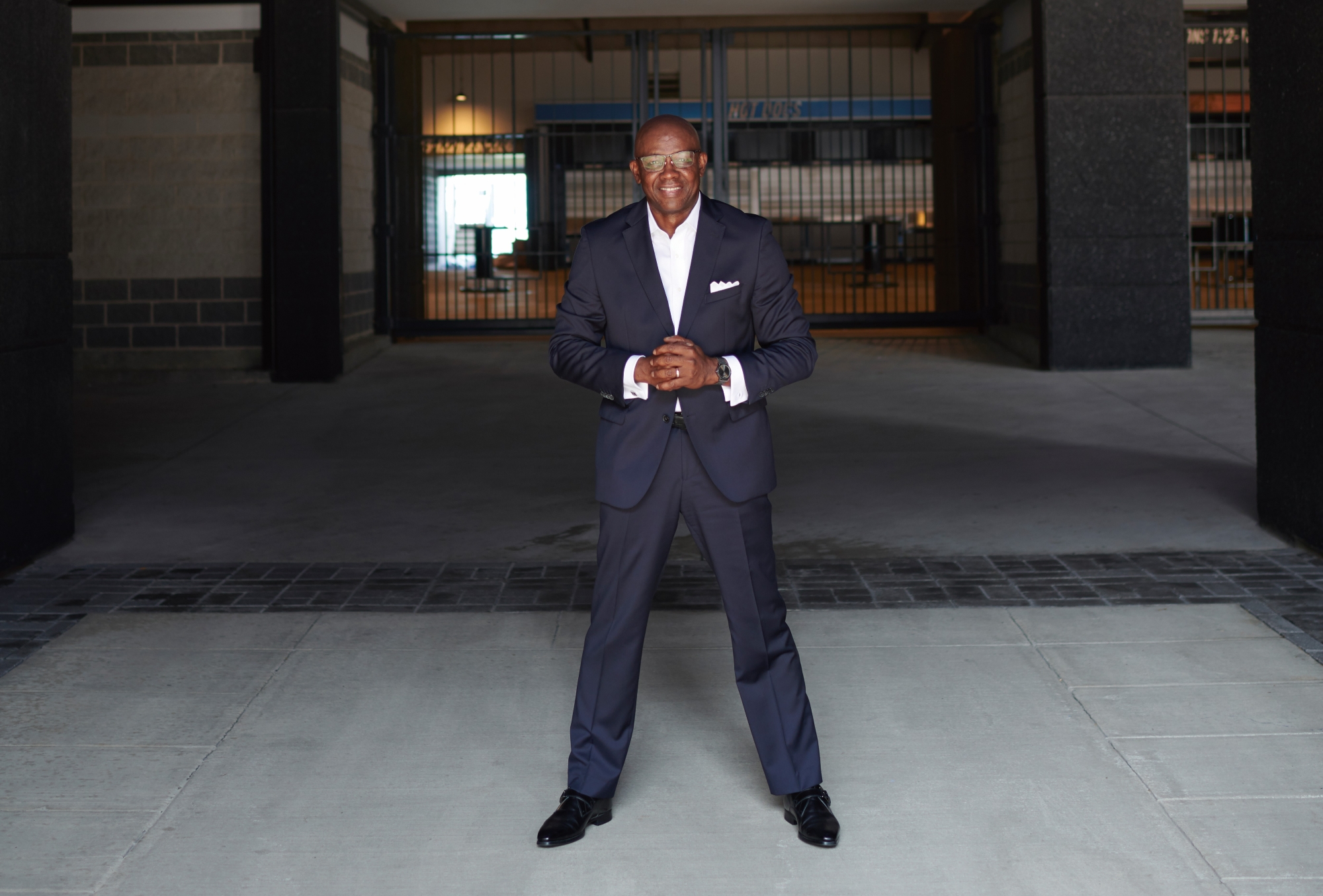
Garry D. Howard left the Milwaukee Journal Sentinel in 2010 to become the editor-in-chief of The Sporting News, the nation’s first comprehensive sports publication. In 2014, he was named the director of corporate business initiatives for American City Business Journals, headquartered in Charlotte, North Carolina, a position he still holds today.
“My writer couldn’t get up there if he wanted to,” he says of the 1993 snowstorm. “So I called my friend Leon Carter, who was an assistant sports editor at the New York Daily News, and I said, ‘Give me your college writer, because I need this game covered.”
Carter’s college beat writer wasn’t available, nor was his top reporter on the high-school sports beat.
“Well, give me anybody,” Howard told him.
Later, Howard received a call from one of Carter’s staffers, and gave him his instructions: Big game, write it from the local Drexel standpoint. They’re right in the thick of their conference race.
“He sends me the story, and it’s like the greatest thing I’ve seen, right? I mean, this thing is singing, I’m telling you,” he says. “I called him back, and I said, ‘Can you do this stuff every day?’”
The reporter, Stephen A. Smith, was floored.
“I was this guy, just a high school writer. What the hell is going on?” recalls Smith, now the highest-paid on-air personality in ESPN’s history.
Howard’s instincts were good; his eye for untapped talent sharp.
“I said, ‘OK, get everything you’ve ever written in your entire life and send it to me. I mean everything,’” he says. “He sent me the package. I knew right then … I said, ‘this boy’s going to be f—ing fantastic!’”
As excited as he was to bring Smith to Philadelphia to cover the NBA’s 76ers some months later, Howard was torn. While he was in Lillehammer to cover the 1994 Winter Games, he took a call from Marty Kaiser, the newly appointed managing editor of the Milwaukee Journal. His sports editor had suddenly quit, and Kaiser needed someone good to fill the role. Calling from Baltimore, where he worked before moving to Milwaukee, he asked Howard to meet.
“While I’m still here, we can talk about this,” Kaiser remembers telling him. “And he said, ‘Nope, I don’t got time. I’m running the Olympic Bureau for Knight Ridder, and I don’t have time.’”
Kaiser was disappointed, but set to work researching the best fit to run his sports department at the Journal. The trouble was that every inquiry he made across the country kept leading him back to Howard.
“Marty kept calling me, saying ‘After you finish the Olympics, just fly out to Milwaukee,’” says Howard, who relented. There, the two attended a Bucks game, where Kaiser offered him the job: executive sports editor.
“I said, ‘You know, there’s not even one Black sports editor in the whole country,’” Howard says. Kaiser was undeterred. He wanted his guy and told Howard, “I asked ten people to give me a list of their top-five sports editors, and your name was on every list, Garry.”
Garry D. Howard was the boss.
* * *
SPORTS JOURNALISM is so dependent on relationships. When star athletes trust journalists, they allow them access that lay people only dream about. But relationships can make or break a newsroom, too. In taking over the Journal, Kaiser was looking for a partner as much as he was in search of a great sports editor.
“I got great support and advice from Garry in the early years as we were changing the culture,” he says. “We both felt like we can make this bigger and better. These people are good. We can recruit good people. We can take these people and make them good.”
For Howard, that was always his modus operandi: Hire the best people and give them the ability to become even better. Empower them. Challenge them. Protect them.
For Howard, that was always his modus operandi: Hire the best people and give them the ability to become even better. Empower them. Challenge them. Protect them. He recalls assigning Lori Nickel to cover Marquette basketball, an issue for head coach Tom Crean, who preferred not to have a woman on the beat. The coach and reporter eventually had an explosive argument.
“Lori was a tough writer, and I had to go down there and let him know,” Howard says. “I said, ‘I buy my paper by the ton, so if you want to get into this, you can’t win. Don’t you ever disrespect her.’”
Nickel knew her editor had her back, and Crean grew to respect both her and Howard.
“When he left to go to Indiana [in 2008], he called me to write a column on him,” Howard says. “I said, ‘But you don’t even know what I’m going to write.’ He says, ‘I know you’re fair. I’ll take my chances.”
These are the same traits that make Howard a leader, not just among his professional peers, but the athletes he’s covered, his classmates, and just about anyone he meets.
“A couple of reunions ago, I remember Garry and another classmate of mine, Slater Kirby, sat down at a table of about ten students,” says Dave Barnes ’77 P’11 ’13 ’19. “Right away, almost like a comedic sketch, they just started teasing the kids, talking to them about themselves and about them. The kids were so engaged, and honestly, so were Garry and Slater.”
Barnes appreciated the moment for two big personalities shining forth, but he also saw something he believes is essential to Howard’s success.
“I thought that was great. It’s a little way of giving back while still being inquisitive,” Barnes says. “I think that’s what makes him such a good journalist, being able to talk like that with folks he doesn’t know and instantly strike up a conversation.”
Perhaps that’s why respect follows Howard, who has covered World Series, NBA All-Star games, and multiple Olympic Games, and has been a voter for the Baseball Hall of Fame for the past fifteen years. He was the first African American ever to serve as president of the Associated Press Sports Editors in its forty-four years, and he was inducted into the Milwaukee Press Club Hall of Fame in 2017. Just this summer, Howard was enshrined in the National Association of Black Journalists Hall of Fame at a star-studded gala in Miami. This most recent honor had Howard reflecting about the role of black journalists at a time when race, sports, and politics seem to collide with increasing frequency.
“I think what I want is to see more people who look like me to get an opportunity, if they’re talented enough, to succeed,” he says. “You have to understand how difficult a job it is that they have right now, to understand the political atmosphere we live in, and still try to navigate those waters safely.
And all [Howard] has ever asked in return is the same thing that he’s tried to do for other people: When you have that opportunity, you extend a helping hand and try to do for others as well.
“These are the heavy, hard rapids, and you have to navigate them well for people to understand what you mean and what point you’re trying to make,” Howard continues, “and it’s important that they hear our voices.”
Howard left the Journal Sentinel (the two major Milwaukee dailies merged in 1995) in 2010 to become the editor-in-chief of The Sporting News, the nation’s first comprehensive sports publication.
In 2014, he was named the director of corporate business initiatives for American City Business Journals, headquartered in Charlotte, North Carolina, where he now makes his home. It’s a job that maximizes Howard’s ability to cultivate relationships — something he’s never forsaken.
“Garry was born to be an executive, because he’s the kind of guy who goes out there pounds the pavement and gets to know people who are talented, but that he feels are also conscientious enough to be about making a difference,” says Smith, who continues to see Howard, only eight years his senior, as a mentor. “And all he’s ever asked in return is the same thing that he’s tried to do for other people: When you have that opportunity, you extend a helping hand and try to do for others as well.”
Howard remembers, though, that none of it began with him.
“At the end of the day, my mother was, no question, 100 percent right,” he says. “She had a vision and said, ‘They can’t guard you, Skeeter. And I’m not talking about basketball!”
* * *
This story originally appeared in the print edition of the Fall 2019 Lawrentian. It was uploaded to this site in February 2026 after Howard was announced as a member of the second class of inductees into the Black Sportswriters Hall of Fame at North Carolina A&T State University. Howard and three other luminaries will be enshrined on April 11.